Google Pixel 11 Pro First Impressions
- Paul Thurrott
- Aug 19, 2026
-
13
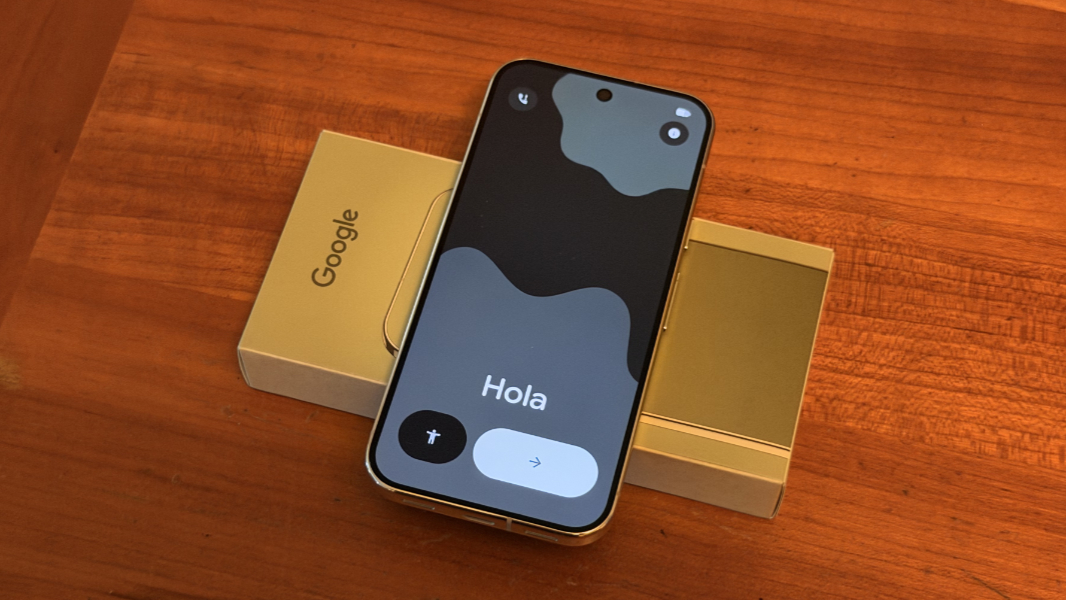
My Google Pixel 11 Pro arrived a day earlier than expected, sparing me the ship-day shenanigans that plagued me in the past. And, yes, it’s exactly what you thought it was, a mid-sized smartphone that’s nearly identical to its predecessor, which I’ll be sending back to Google soon for the trade-in value.
The unboxing betrayed no surprises: Google continues to use the smallest-possible eco-friendly packaging imaginable, and wrestling the device from its tiny coffin requires you to struggle only with a single cardboard-based tape and a tight sleeve and box top. The word hero is tossed around a bit too easily these days, but I did make short work of it.
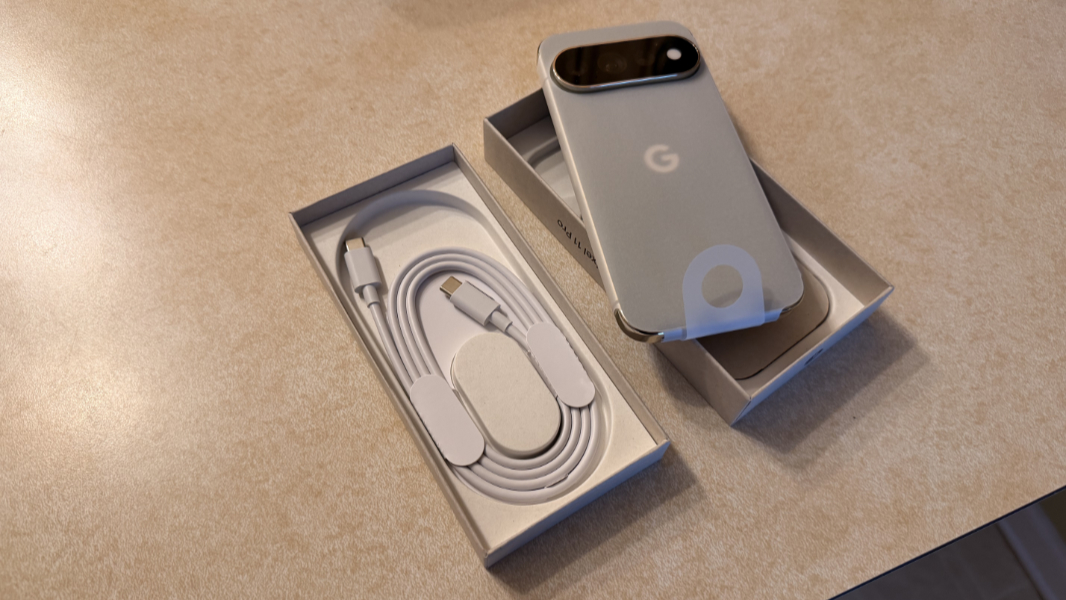
Google bundles a single white USB-C charging cable with the Pixel, but I’ll leave it in the box as it’s almost definitely a USB 2.0 cable, and I’m already swimming in faster and higher-quality cables.
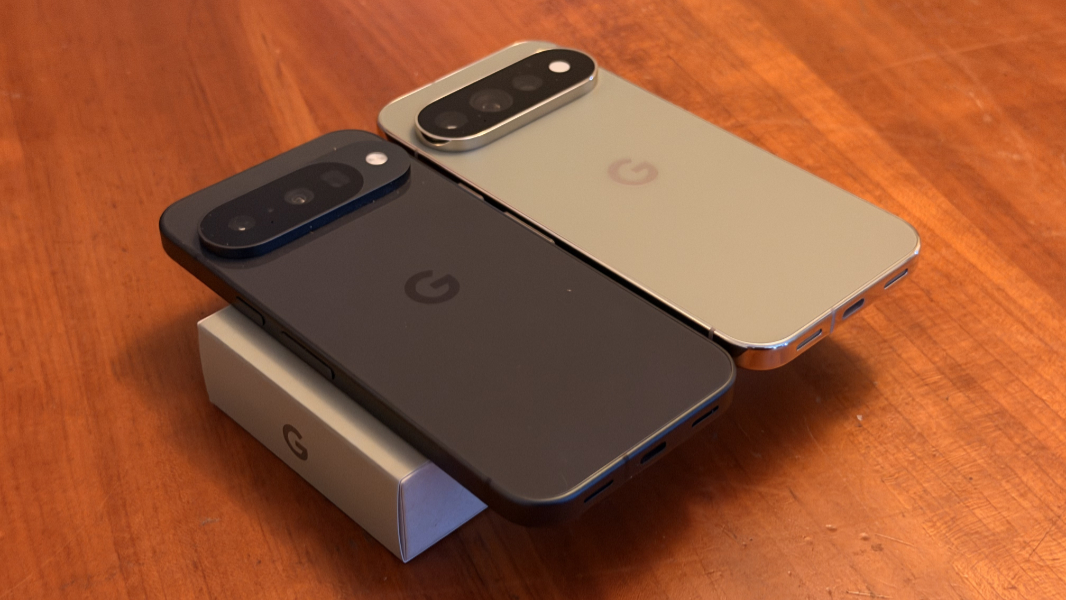
The Pixel 11 Pro to Pixel 10 Pro comparison is almost too obvious to bother with, but I wanted to get this out of the way so I can ship the previously reset older phone back as soon as possible. Last year, Google sent me an Obsidian (black) Pixel 10 Pro with the base 16 GB of RAM and 128 GB of storage, and this year, I bought an Olive (gray-green) Pixel 11 Pro with the base 12 GB of RAM (a downgrade) and 256 GB of storage (an upgrade). Given the component crisis, it is perhaps surprising that this new phone is only $100 more expensive than its predecessor.
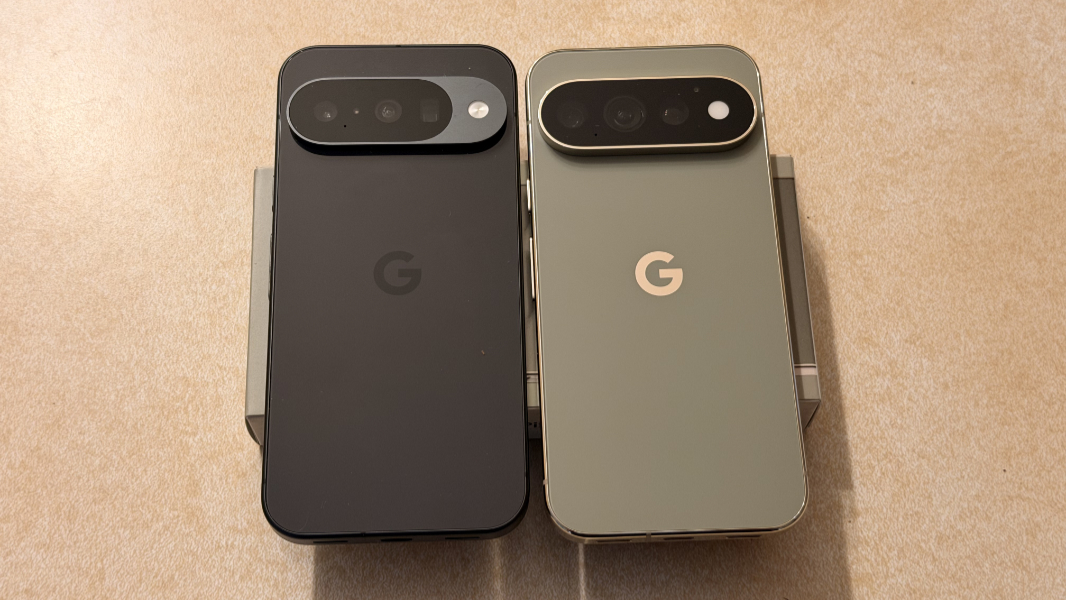
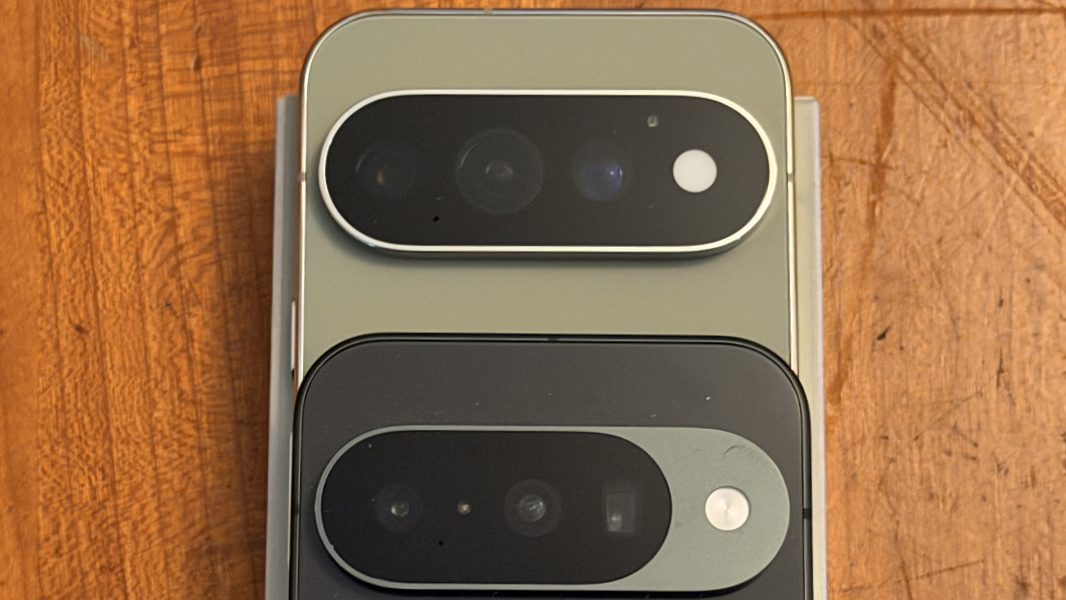
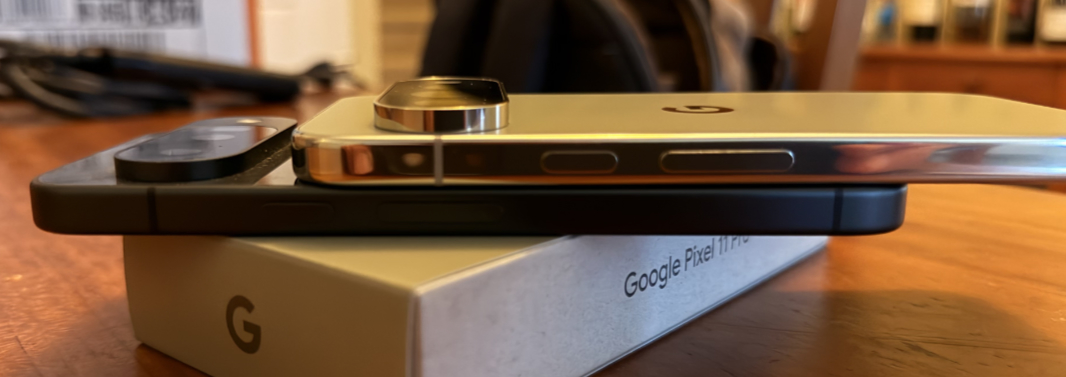
Had I paid for a Pixel 10 Pro a year ago, I would have chosen a different color and, most likely, paid for the 256 GB upgrade. So the Pixel 11 Pro is at least closer to my personal preferences in those ways. But the polished metal frame on the Olive Pixel 11 Pro is much more contrasty than the one on its Obsidian predecessor because the frame is a shiny gold color that really stands out. On the Pixel 10 Pro in Obsidian, the frame was a matte dark gray and not too different from the body. I like the contrast and the mix of the green/gray and gold here.
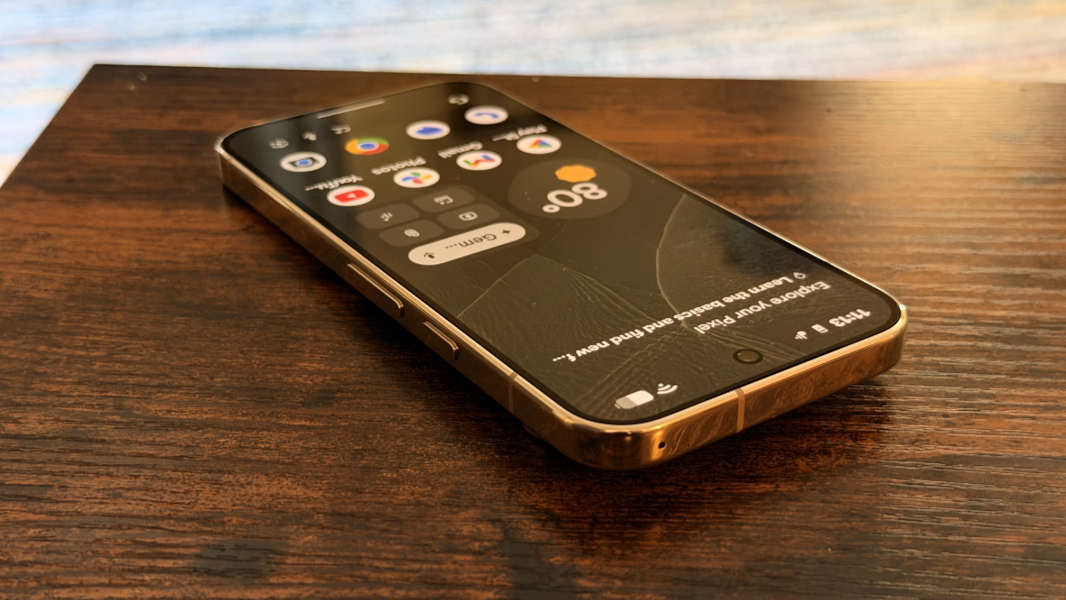
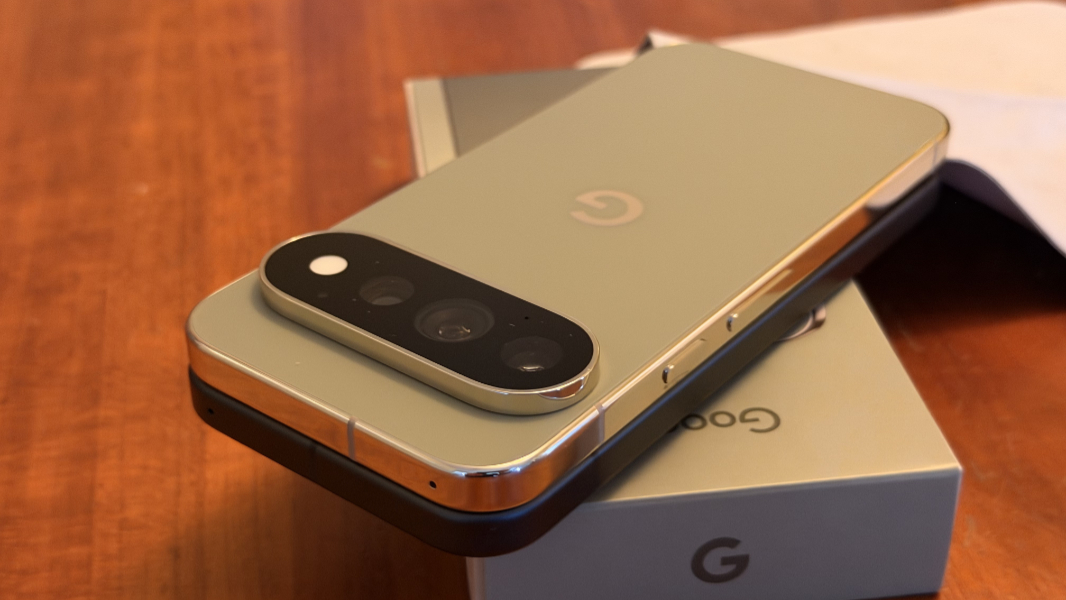
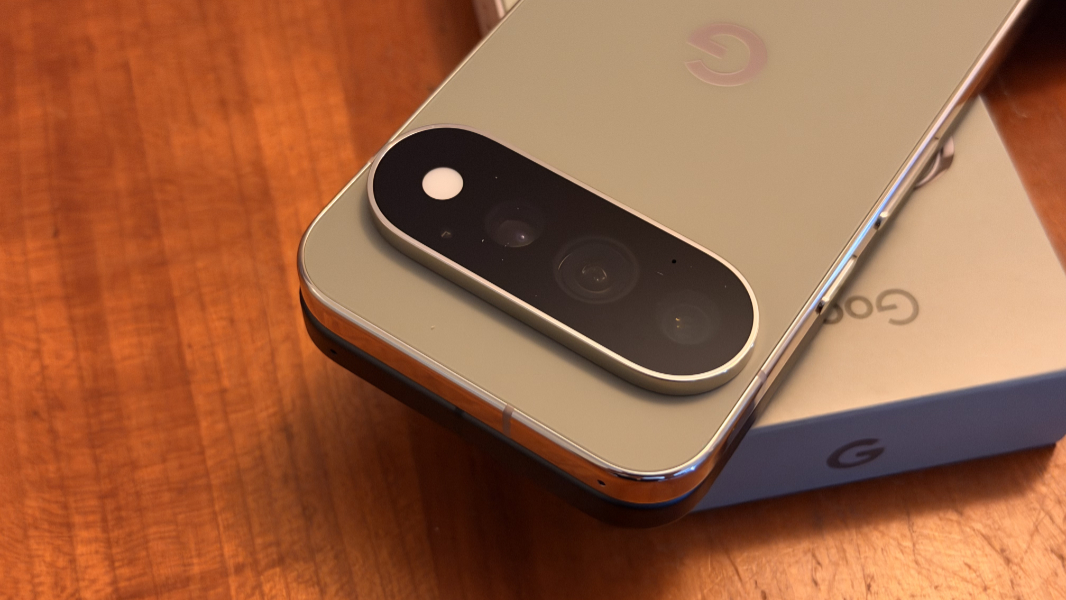
This I can’t explain. The camera bar on the Pixel 11 Pro is allegedly less tall than that on the Pixel 10 Pro, but looking at the two side by side, it appears to be taller. This may be an optical illusion due to the shiny nature of the new one and the matte of the old one, but there it is. I don’t care all that much, honestly, as the Pixel camera bar is unique and distinctive. And I do like how there’s no more metal or plastic in the camera bar now. On the Pixel 11 Pro, it’s all covered in a sheet of glass. It’s a great look.
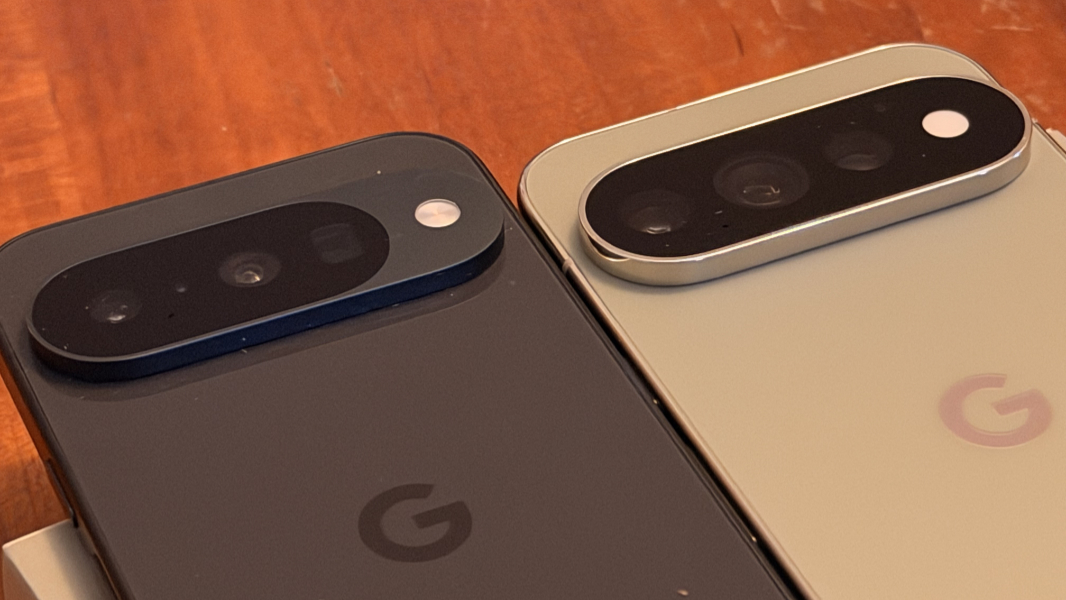
Beyond all that, the “G” logo on the back of the Pixel 11 Pro is noticeably bigger than that on its predecessor, and it really stands out because it’s shiny now and a different color. But the rest of the device’s physical properties seem identical or nearly so. The buttons are all the same sizes and in the same locations, as are the antenna signal breaks on the frame, the USB port, speaker, and microphone slots on the bottom, and the lack of a physical SIM card tray (at least here in the U.S.)
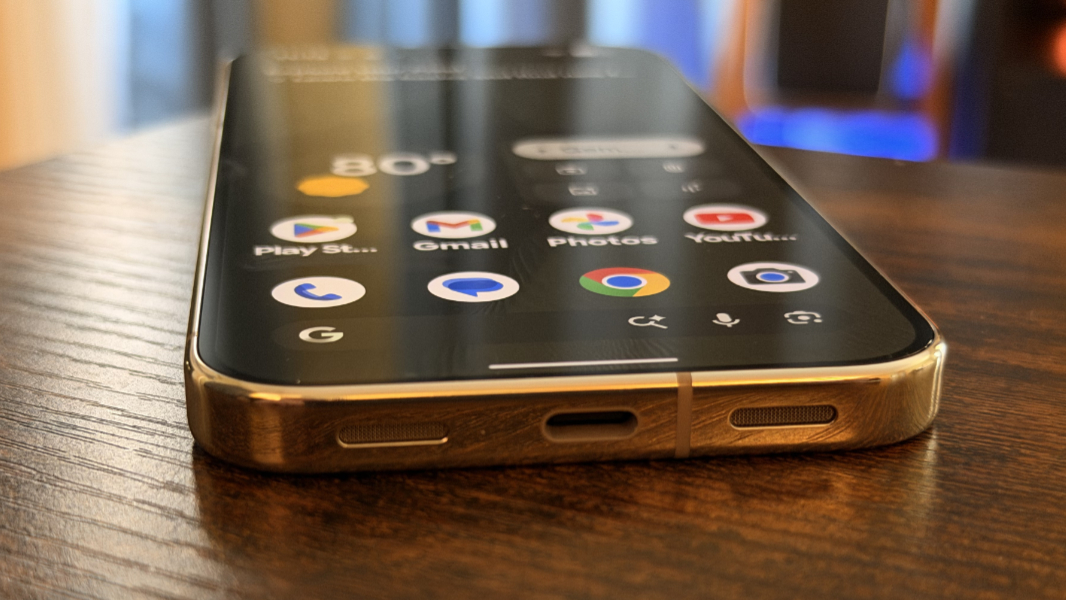
That makes sense, and the Google Store website’s phone comparison page helpfully points out that the two devices are identical in their dimensions while the Pixel 11 Pro is just 0.1 ounce lighter, at 7.2 ounces. That may be due to its slightly smaller–4850 mAh vs. 4870 mAh–battery, but it’s impossible to say and doesn’t much matter.
So what’s not identical?
The Pixel 11 Pro display is slightly brighter than that of the Pixel 10 Pro, as it hits 3600 nits of peak brightness (vs. 3300 nits) and up to 2400 nits for HDR content (vs. 2200 nits), and it has an anti-scratch coating the Pixel 10 Pro lacks.
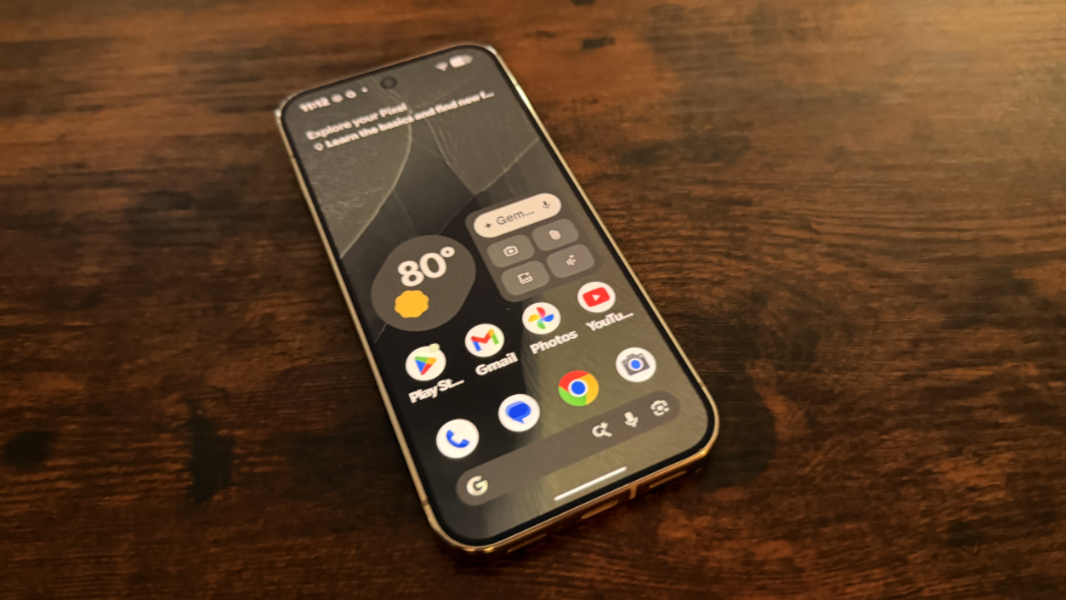
The Pixel 11 Pro includes the goofy new HiLite feature that pulses and colorizes a round light in the camera bar in response to Gemini and a limited set of notification activities.
The Pixel 11 Pro has a Tensor G6 processor and a Titan M3 security chip, compared to the Tensor G5 and Titan M2 for its predecessor.
The camera systems are mostly identical front and back, but the main and telephoto lenses have larger sensors that let in more light, and the Pixel 11 Pro can use Pro Zoom up to 120x vs. 100x for the Pixel 10 Pro. More importantly, at least for now, the Pixel 11 Pro has a handful of unique camera app and photography features I am very curious to test, most notably Camera Looks.
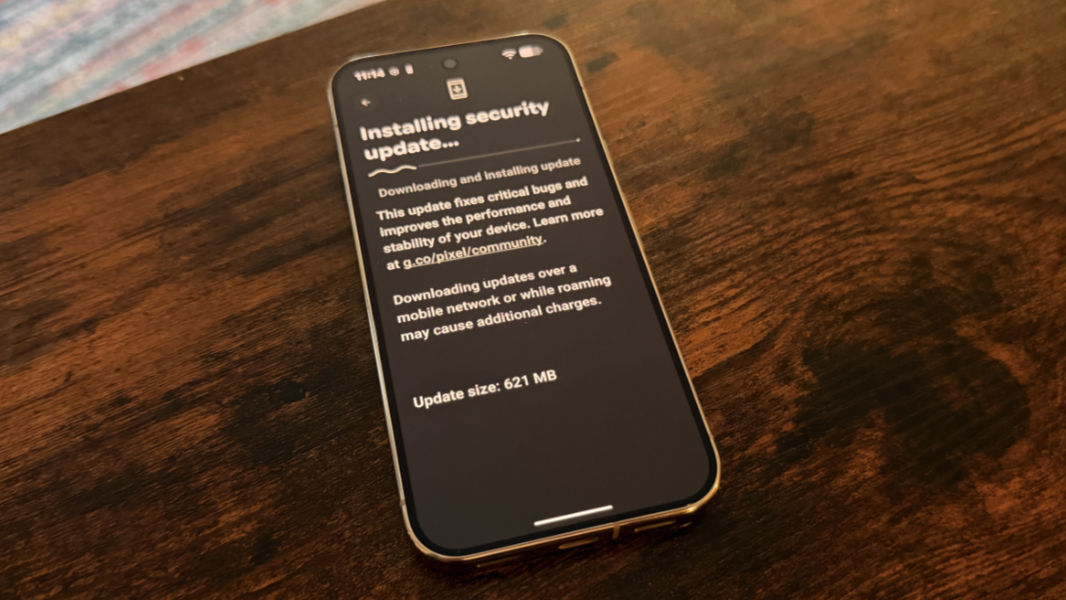
Finally, the Pixel 11 Pro arrives with Android 17, while the Pixel 10 Pro came with Android 16 (and is now running Android 17, of course).
Put more concisely, there’s not much of a difference. HiLite, Camera Looks, and other new camera/photography features are top of mind, and since I’m going away for a long weekend in the Finger Lakes in upstate New York starting tomorrow, I will at least have ample opportunities to begin those tests.
I find myself wishing, once again, that I could just use this handsome new smartphone without a case. But I won’t. Like every phone I’ve owned, it’s as slippery as a bar of soap, and I’m as clumsy as an ox. I would need to trust both this device and myself more than I do, and I will keep reminding myself that it’s incredibly expensive and can be scratched by a stiff wind, if history is any guide. As it is.
More soon.