Apple’s $299 HomeView Smart Display Launches On November 13 in Select Markets
- Laurent Giret
- Oct 13, 2026
-
1
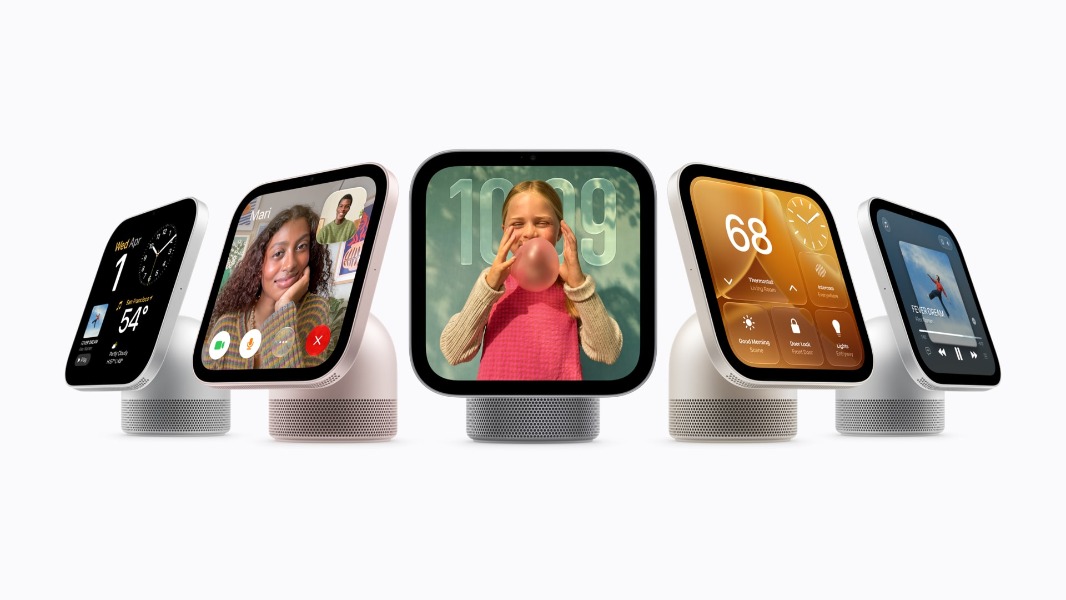
Apple’s first smart display is called the HomeView, and it will launch in select markets on November 13. As expected, the display is connected to a base speaker, but a wall-mounted version is also available. Apple’s new Siri AI assistant is also available in beta on the HomeView, and an Apple Intelligence-enabled iPhone or iPad will be required to get the complete experience.
Apple’s HomeView is available to pre-order today in the US, UK, Canada, Australia, New Zealand, Singapore, South Africa, and India. This had to be expected, but it’s not coming to the EU at launch due to the unavailability of Siri AI on iPhones and iPads in the area. “Apple is working constructively with the EU in an attempt to find a path forward,” the company said today.
The HomeView features a 7-inch display connected to the base speaker with a stainless steel hinge that can tilt, and it’s available in silver, starlight, rose pink, and space gray finishes. Apple said that the device can be put on a kitchen counter, nightstand, or side table, and brightness levels can automatically adjust from 0.3 nits to 500 nits in bright daylight. The wall-mounted HomeView model, however, is only available in space gray and silver, but it’s also priced at $299, and customers can choose between three purpose-built mounts from Schneider Home.
The HomeView has no buttons, but it has a 12MP Center Stage camera for FaceTime calls and a four-microphone array for far-field Siri. The device also supports sound Recognition for smoke and carbon monoxide alarm sounds, and it also has temperature and humidity sensors for smart home routines.
The HomeView can be used as a smart home hub, a communication device, an AI assistant with the built-in Siri AI, and a media consumption device. It supports a selection of Apple apps such as FaceTime, Messages, Apple Music, Apple Podcasts, Safari, and even Apple TV, and it also supports a selection of third-party audio and video apps. The HomeView can recognize up to six people in the same household and provide a personalized experience for each of them.
“Apple HomeView is designed to be shared by everyone in the home yet feel completely personal to each user,” said Greg Joswiak, Apple’s senior vice president of Worldwide Marketing. “It recognizes your face to shift from a household screen to your own experience, fills the room with incredible sound, keeps you connected to the people who matter most with FaceTime, and makes it easy to control your smart home. And it’s powered by Apple Intelligence with Siri AI at its core, drawing on personal context from your iPhone to help you find what you need and get more done, all while keeping everyone’s information private and secure.”
The UI of the HomeView is quite reminiscent of watchOS, with each user getting a personalized Home Screen with custom apps and widgets. The smart display can recognize users by their face, and the UI can be customized with “faces” offering information at a glance. Users can only access their personal content on a HomeView when their paired iPhone or iPad is connected to the same Wi-Fi network and has been recently unlocked, and after HomeView recognizes their face.
“The A18 chip inside HomeView contains Secure Exclaves that process the camera and microphone feeds in a secure compartment that cannot be accessed by the operating system or by Apple. This enables HomeView to recognize the face and voice of each user without exposing the audio and visual data to the operating system,” Apple explained today.
After being recognized, each HomeView user can access their personal information, interact with Siri AI, or even continue media playback or phone calls started on an iPhone. With an Apple Intelligence-enabled iPhone or iPad, Siri AI can also take action across apps and do more by leveraging each user’s personal context.
Because HomeView is deeply integrated within the Apple ecosystem, users will really need an iPhone and an Apple account to get the full HomeView experience. However, guests will still be able to use the smart display to check the weather, play music, set timers, and control smart home accessories.
As a smart home hub, the HomeView can be used to control “thousands” of accessories compatible with the Apple Home ecosystem. Today, Apple also announced the Apple Home Collection, a new lineup of smart home accessories designed in collaboration with LG Electronics and Schneider Electric. I’ll have more information about this collection in a separate post.