Google Pixel 10 Pro Fold Preview
- Paul Thurrott
- Nov 11, 2025
-
9
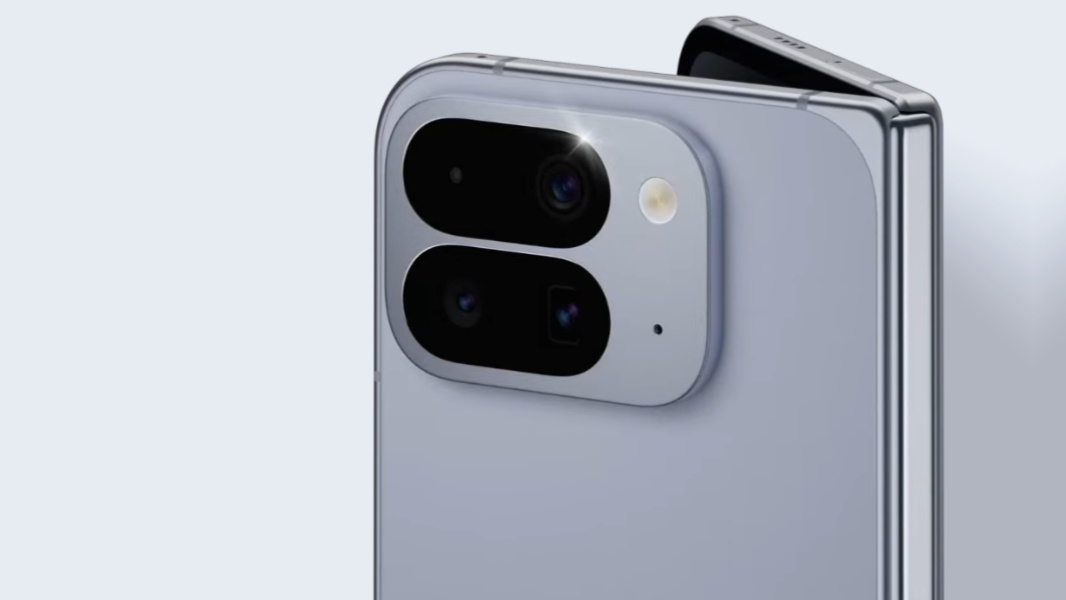
We’re flying back to Pennsylvania a week from Friday, but I’ve been thinking about my next smartphone(s) for months. As you may know, I reviewed the Pixel 10, Pixel 10 Pro, and Pixel 10 Pro XL while we were here in Mexico in addition to a series of articles examining the broader Pixel ecosystem, including related products like the Pixelsnap accessories, Pixel Buds Pro 2, and Google TV Streamer. But I have to ship the phones back to Google. And to date, I’ve missed a major piece of the late 2025 Pixel lineup, the Pixel 10 Pro Fold.
The timing isn’t ideal: We flew to Mexico in mid-September, so I missed the launch windows for the iPhone 17 series in late September and the Pixel 10 Pro Fold in early October. And it just didn’t make sense to purchase a new iPhone or Pixel in Mexico, given how expensive these products are here, though I did of course look into it. So I’ve waited, and I’ve had a lot more time than usual to consider—and almost endlessly reconsider—what it is I’d do as our return date got closer.
I’ll write about my decision on the iPhone side of this equation soon. But because Google just delivered a new Pixel 10 Pro Fold to my home in Pennsylvania today, this seems like the right time to discuss that decision. Which, frankly, wasn’t all that difficult, though I guess I could have saved some money and stuck with one of the more traditional Pixel 10s. Not that you asked, but if pressed, I would likely choose the Pixel 10 Pro XL, if only for its larger display.

So let me start there, with the most obvious concern. The cost.
Money, money
I went through these machinations a bit in Paul’s Pixel 10 Diaries: A Foldable Future? ⭐, but some of the numbers changed since I did my original math. And they’ve changed again since I ordered a Pixel 10 Pro Fold, which explains why I ordered it the other day. Today, the base Pixel 10 Pro Fold with 256 GB of storage costs $1799, its normal retail price. But it was just on sale for $300 at the Google Store, so I placed my order at $1499 on the last day of that sale. (If history is any guide, there will be many future sales as well, and it’s possible the price will be even better over the Black Friday period.)
As noted previously, I had a bit over $600 in credit at the Google Store from my Pixel 9 Pro XL trade-in, so that knocked the price down further, to about $899. But I also traded in my Galaxy S25+, which was now worth $400 on trade. So the final cost, including taxes, was about $585. And since I have enough to cover that in PayPal, I’m good to go. I don’t need to worry about financing or paying it off over time.
If I could have waited, I guess I would have. But the Pixel 10 Pro Fold was set to arrive tomorrow (Wednesday), and it ended up arriving today, a day early. We have a neighbor looking out for this kind of thing, so she was able to collect it off the front porch and get it inside, thankfully.
Configuration
I went with the 256 GB model because I don’t need more storage and the upgrades are expensive: A 512 GB model is $1919 normally while a 1 TB version is $2149. Yikes.
Sadly, there are only two color choices, and neither is particularly compelling: Moonstone, a sort of blue-gray that I ordered and a strange Jade color with gold accents. I wish the Indigo blue color offered only with the base Pixel 10 was an option, but it’s not. And of course I’m going to want a case anyway.
Speaking of which, as I was writing this, it occurred to me that I never ordered a case. But that was purposeful: Once this transaction was completed, Google gave me over $90 in store credit. So I just used that to order a black Pixelsnap Case for Pixel 10 Pro Fold that will arrive next week before we get home. Nice.
Use cases
My wife was recently offered a chance by Verizon to upgrade to a new phone for free or a much lower than usual cost, depending on what she chose. And she held off on that for too long, as it turns out, because she missed her window, and now the deal has been altered so much it no longer makes sense. (It was something like a three-year commitment and she had to raise her plan to a more costly version.) But during those weeks, she debated what to do almost as much as I do. And she wanted my advice: Replace her Samsung Galaxy S24 Ultra with an S25 Ultra, basically for free, or spend about $800 on a Galaxy Z Flip7.
My wife is—how do I say this?—thrifty to a degree I appreciate but also don’t quite understand, and she was not inclined to spend $800 on anything, let alone an out of band phone upgrade she didn’t seek. But you may be surprised to know that I did not try to convince her to get the Fold. I was surprised that she rejected this offer so quickly, however, as she, like me, is quite interested in folding phones and would benefit from the Fold’s larger displays. I’m not sure what I did to change her mind, but she did finally decide to get one. At which point the deal had ended, and that was that. I did tell her she was welcome to use the Pixel 10 Pro Fold once I was done reviewing it, and perhaps that will help her decide if this form factor is for her. As it will for me.
As to why one might want a folding phone, and casting aside the “because it’s cool” non-rationale, this may seem obvious, but it’s perhaps more nuanced and probably varies by person. But when you think about hybrid devices and the dream that drives such things, the goal here is to replace two devices with one device. That is, any device can do two things poorly. But if you can find one device that does two things without a meaningful compromise, that’s magic.
With a folding phone like the Pixel 10 Pro Fold, then, the goal is for this to make sense both as a phone—as in, while using it closed with the exterior display—and as a mini-tablet that offers a much more generous interior display. Most people use phones a lot more than tablets, so getting the exterior display right is key, as is the device’s thickness in that posture. And that is one area in which I suspect that the ultra-thin Galaxy Z Fold7 wins handily, not that that was ever an option for me.
Some use cases for the interior (folding) display are obvious enough, and I think most fall into a secondary (non-essential) category. Nice to have. Things like reading, of course, which is something I do every day, though replacing the iPad I use in the mornings and evenings is a stretch. Watching movies and other videos, especially on YouTube, another daily activity, though that often happens on a TV unless I’m traveling.
But my aging eyes, like those of my wife, would benefit from a larger display more often these days and going forward. I could imagine using it for Google Maps out in the world or even when navigating in a car. It would be terrific for viewing photos in Google Photos, but also for posting them online usin Instagram or Facebook. Web browsing, which is reading, of course, but using the desktop versions of sites. It would be good for Google Meet and other video calls, something I often use the iPad for today.
Less obviously, the larger display might cause me to begin doing things that I don’t do currently on mobile, like edit photos and videos. Or play video games.
There’s theory and then there’s reality. So part of this experiment will be about seeing what sticks, if anything, and what doesn’t. And while I realize that nothing I wrote above is particularly imaginative, maybe that’s the point. These are just the basics and if a folding phone fails at these things, then that’s fine, it’s back to “right tool for the job.” But I’m open to the hybrid future. I just need to see where it is right now.
And so I will. But not until about 10 days from now. 🙂