IFA 2025: Lenovo, Experimentation, and the Future of the PC
- Paul Thurrott
- Sep 05, 2025
-
3

After yesterday’s Lenovo Innovation World press conference, I was invited to meet with Lenovo vice president Tom Butler to discuss laptops, experimentation, and what’s next for the PC.
Butler is a 20-year veteran at Lenovo and he spent most of that time working directly with the notebook PC systems that he now oversees worldwide. He provided me with an inside look at how Lenovo is evolving its commercial PC business to adapt to an needs of a bigger and bigger audience, many of whom are new to ThinkPad and ThinkBook and have different needs and expectations than its traditional business customers. He also explained why Lenovo, the world’s biggest PC maker by unit sales and revenues, experiments with and sells so many new form factors and designs.
We started with the ThinkPad X9 Aura Edition, which Lenovo announced at CES 2025 back in January.
? Glacier White
To many, the ThinkPad X1 Carbon is the epitome of the ThinkPad brand, an ultra-light laptop with all the iconic ThinkPad branding elements and traditional TrackPoint pointing system. But ThinkPad has had to evolve with the times, too, and even the X1 Carbon has adapted in subtle ways by moving to scalloped, island-style keys and the “reverse notch” design of the communications bar.
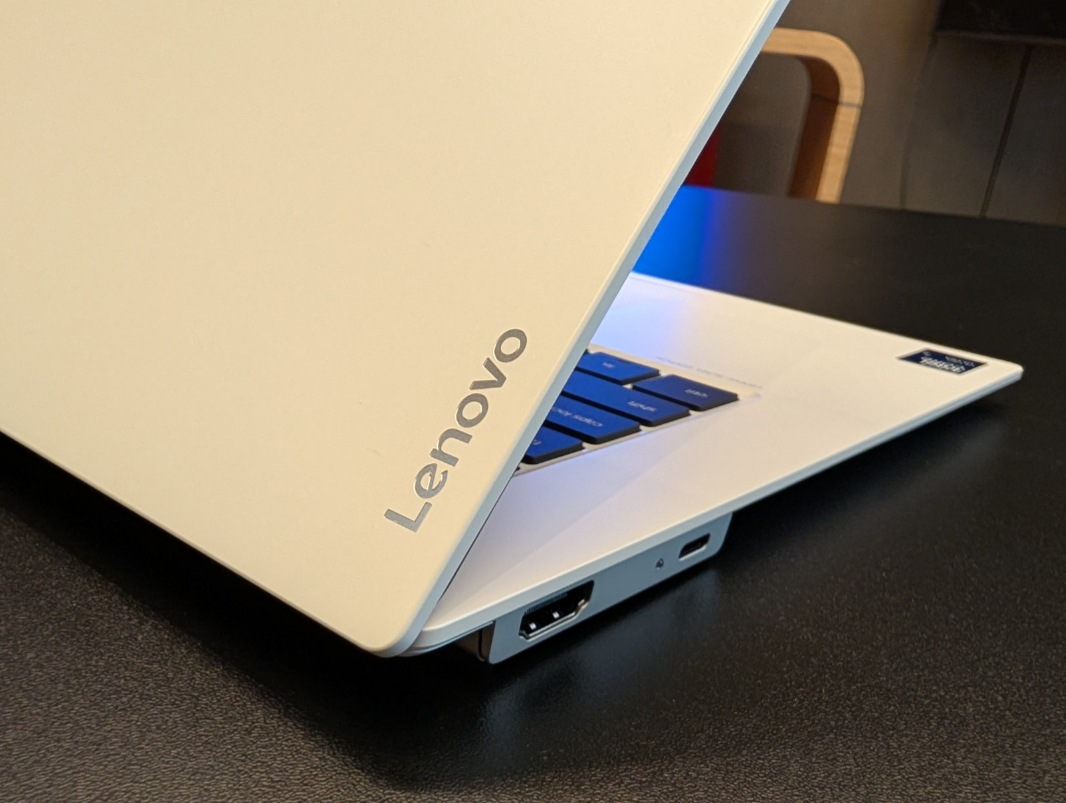
Lenovo also wanted to reach non-traditional customers who might want designs even more radical than some ThinkPad customers would accept. And so the X9 series was created specifically for that new audience. I reviewed the ThinkPad X9 14 Aura Edition back in March, describing it as “the anti-ThinkPad” thanks to its unique keyboard, lack of TrackPoint, squared-off engine hub for the ports, and gray aluminum body, and noting that it should appeal to anyone who wants a PC that looks like a MacBook Pro.
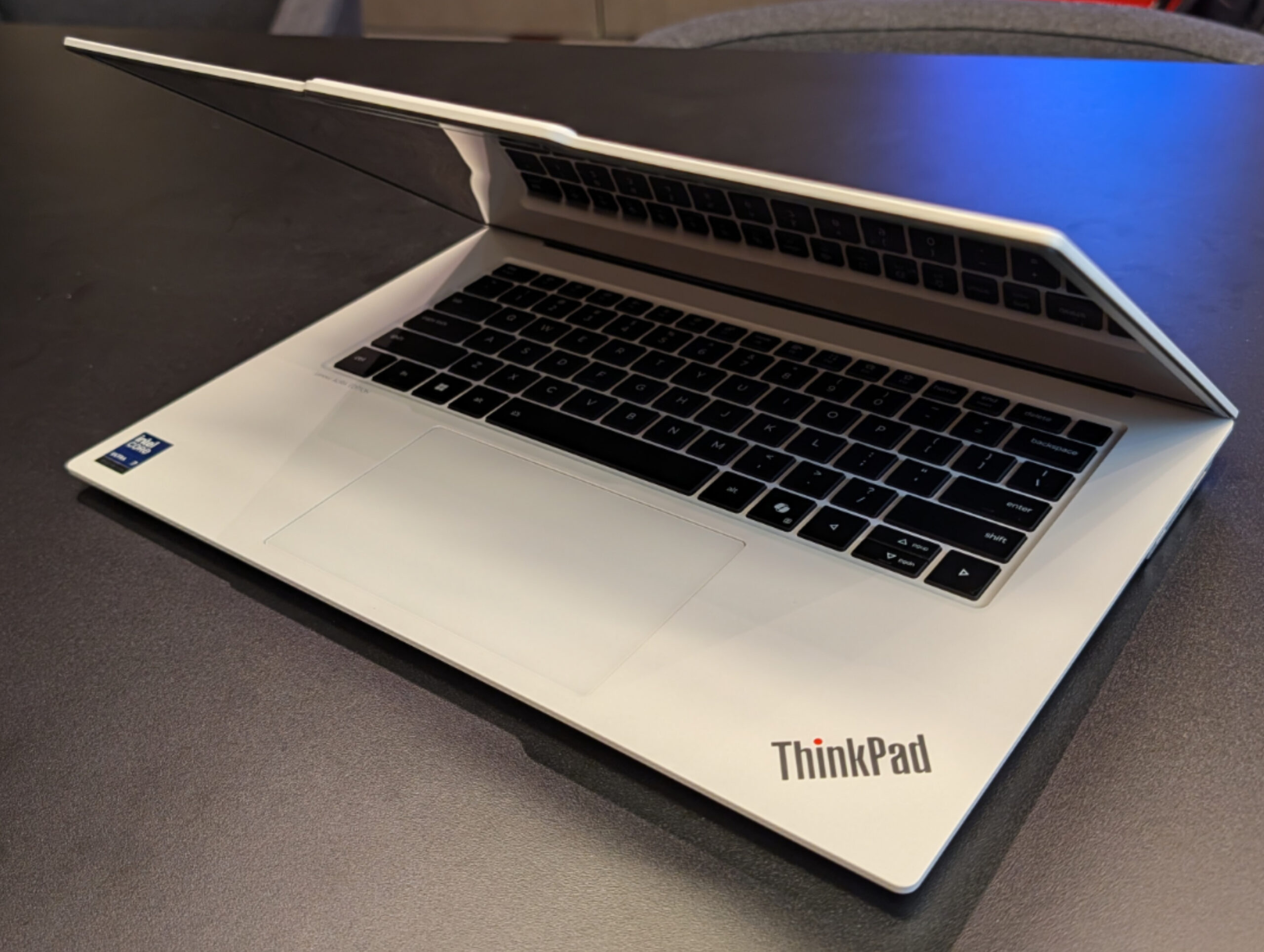
Butler confirmed that the X9 was all about reaching new customers. But he also wanted the line to go beyond the black and gray colors Lenovo initially offered. And after experimenting with various choices, the team found a wonderful, porcelain-like Glacier White color. It’s head-turning and should sell well, though it will only be available for a limited time. It’s also designed to limit fingerprint smudges, a big problem with the X1 Carbon, by the way. It’s a really nice look.
? ThinkBook Vertiflex Concept
Lenovo showed off three proofs of concept at its IFA 2025 press conference, and they are perhaps most notable for being both quirky and immediately useful. One of those concepts, the ThinkBook Vertiflex, is a logical extension of the experimentation that Lenovo has done over several years with products like the ThinkBook Plus Gen 5 (detachable display that’s also an Android tablet), ThinkBook Plus Gen 3 (second display on the wrist rest), ThinkBook Plus Gen 2 (e-ink screen on the exterior of the display panel), Yoga Book 9i (dual-screen laptop), and ThinkPad X1 Fold 16 (folding display laptop), not to mention the innovative ThinkBook Plus Gen 6 Rollable, which offers a 14-inch display that expands upward in a portrait orientation to 16 inches at the touch of a button.

“The number one posture for our folding devices is vertically, in portrait mode,” he said. “It’s good for productivity work, if you’re writing or reading documents, coding, or scrolling the web or social media.”
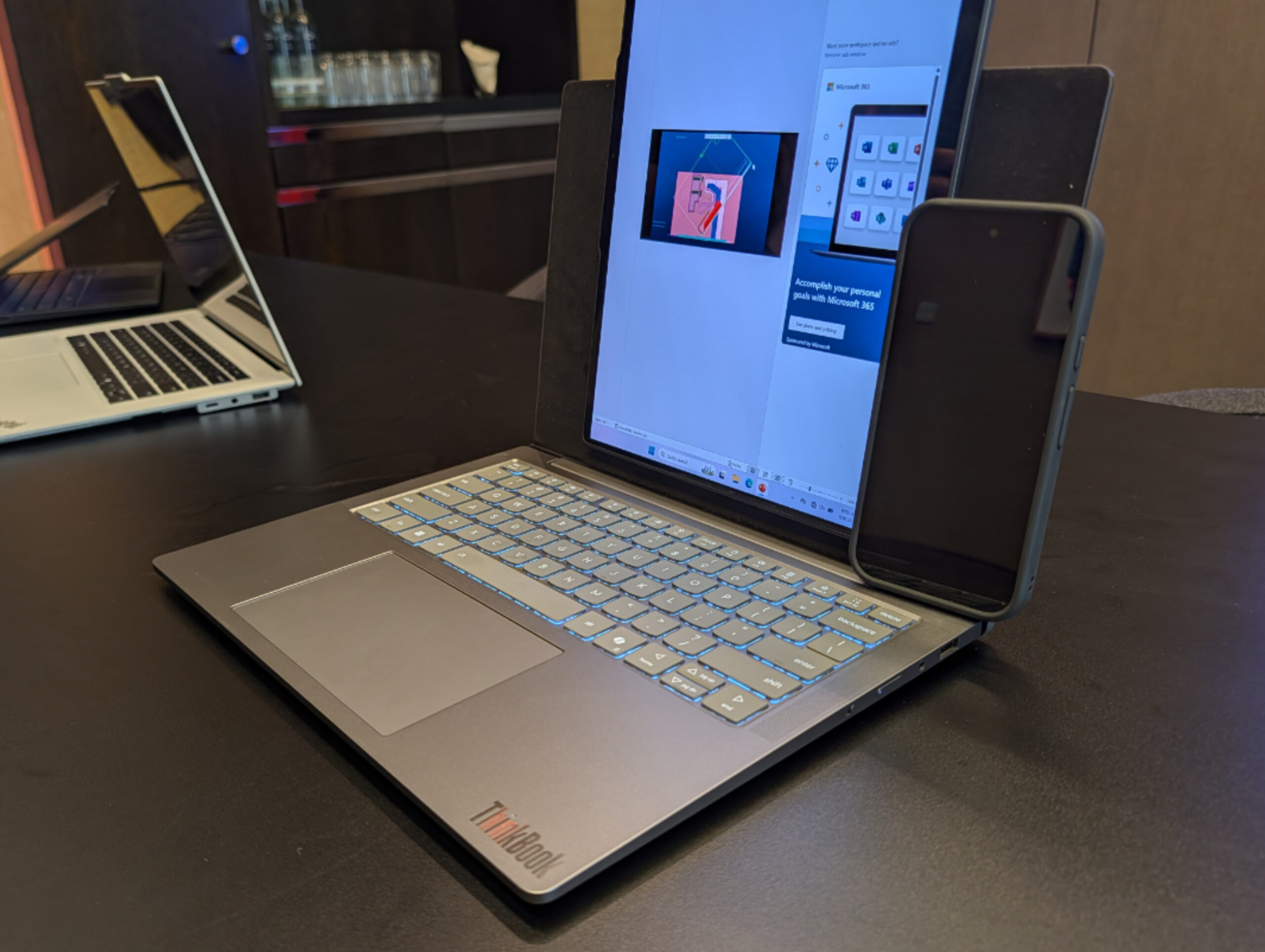
Customers always ask about the impossible combination of the smallest possible device for portability but the biggest possible screen while in use, he added. And that’s led down some interesting experimental paths. The latest of which is the ThinkBook Vertiflex Concept. This idea was based on something Butler sees again and again, customers who dock a 2-in-1 or tablet PC to a single large display at a desk and then rotate the portable display so that it’s in portrait orientation. But you can’t do that with a traditional laptop. So the Vertiflex offers a solution: Its display can work in both portrait and landscape modes.

The trick here was emulating how desktop monitor mounts work but in a package that’s thin, light, and seamless enough to make sense in a laptop. It does, of course, add some thickness to the display, and there’s a bit of wobble, and those issues help explain why this isn’t yet a shipping product. But it’s also clear that it will work, and I’d be surprised if Lenovo didn’t release this in the next year or so.

In use, the transition between landscape and portrait orientations is about as fluid as possible, and you can make the change with just one finger, pushing to the left at the top right of the screen corner when in landscape mode, and then in reverse when in portrait mode. As the screen glides into its new orientation, the on-screen display rotates to match. And as an added bonus, you can place a phone next to the display when it’s in portrait mode, on either side, and it will automatically launch into Lenovo’s Smart Connect experience for PC/phone integration. They’re looking into wirelessly charging the phone that way as well.
“We have a platform that supports both iOS and Android,” he said. “You’ll have an easier, better experience. So, just another novel way to work playfully.”
The ThinkBook Vertiflex was codenamed “Pivo” until just before the public announcement, Butler told me. It’s obviously a play on the word “pivot,” which one could imagine being pronounced without the hard “t” at the end.
One of the issues with the prototype is longevity: In addition to adding thickness and weight, the mechanism inside the back of the display has to meet Lenovo’s durability requirements. The current version is an early proof of concept, but they’re working on beefing up the rotation mechanism so that it can be mass produced.
Fortunately, that bar is a bit lower for ThinkBook, which explains why it’s being applied to this product even during its concept phase.
? ThinkBook as the home for wayward laptop designs
Lenovo launched the ThinkBook brand in 2019 to reach small and mid-sized businesses, and the initial designs were minimalist but traditional laptops. But since then, it’s expanded ThinkBook to include the Plus products, which are largely experimental in nature. How did that come about?

“ThinkBook has become a platform that allows for experimentation,” Butler told me. “The ThinkBook allows us to be playful and experimental. If I commission that as a ThinkPad, we have to bring it to the full market, support it in 180 countries globally, and it’s gotta be enterprise grade. But this is a nice platform to play with. And we’re super pleased with how this came about.”
I asked why the world’s largest PC maker would be experimental when those types of companies tend to be conservative. Butler told me that it would be easy to make minimal improvements to screens, bezel sizes, and other evolutionary changes. But if the PC market is going to remain healthy, he said, someone needs to experiment. And if not Lenovo, then who? Basically, Butler and his team feel like this work is their responsibility.
? Looking to the future
While much of the conversation we had about future PCs was off the record (sorry), Butler pointed to the ThinkBook Plus Gen 6 Rollable and how it’s inspired conversations about even more radical designs. I asked whether Lenovo had considered a horizontally expanding display, and I was predictably told that I wasn’t the first to suggest such a thing. He didn’t confirm whether Lenovo was working on that design, but he did note that the company was working on all kinds of prototypes with multiple display capabilities, as one would expect.
One clue to the future of the PC, or perhaps I should write a future of the PC, can be found in the Lenovo Magic Bay HUD that was also announced this week at IFA. This had debuted back in March as a concept called Magic Bay Tiko Pro, a sort of modular external display that connects to the top of compatible ThinkBook laptops and can be used as a secondary mini display for status information you may need to keep track of. You can swap that out for other Magic Bay peripherals, which include things like webcams and lighting for work calls.

Butler agreed that natural language interactions would become more important as AI improved, and as form factors evolved. And device interoperability, as Lenovo implements through Smart Connect, will play a big role going forward as well. Lenovo is also partnering with long-time partner Intel on an AI Agent Pilot Program to help organizations build and deploy protected, on-device generative AI solutions tailored to commercial workflows. One proof of concept for this program is an assistant that automates peer reviews for IEEE journal editors while keeping sensitive data local to the PC and compliant with strict privacy requirements.
One thing that’s certain is that Lenovo will keep experimenting.
“We’ve learned something from all of [the prototypes and other experiments],” he told me. “And sometimes you just land on a design where it’s like, why haven’t we done this before?”