Work and School Accounts
- Paul Thurrott
- Nov 23, 2022
-
3
Most people sign into Windows 11 with a personal Microsoft account (MSA), and so we focus almost exclusively on that obvious use case in this book. But there are some people who also have what Microsoft calls a work or school account, which is a special kind of Microsoft account based on a technology called Azure Active Directory (Azure AD or AAD). And you can use this account type with Windows 11 as well.
Some may think of this account as a “Microsoft 365 account,” because it is often tied to Microsoft 365 commercial products and services like OneDrive (for Business) and the Microsoft Office suite of applications. But here we will use the term “work or school account” because that’s how it’s identified in Windows.
There are different ways to use a Microsoft work or school account with Windows 11. Some key scenarios include:
Connect it to a Microsoft account sign in. In this scenario, you sign into Windows 11 with a Microsoft account as usual but then later connect a work or school account so that you can access OneDrive (for Business) cloud storage and its contained files, your work or school email and calendar, Microsoft Office applications, and other assets that are associated with that account. In effect, you use both accounts side-by-side, though your Microsoft account is your primary account, and the account you will use to sign into Windows 11.
Sign into Windows 11 with a work or school account instead of a Microsoft account. Those who are loaned a PC by their work or school are usually required to sign into that PC using their Microsoft work or school account instead of a personal Microsoft account. This allows the organization to remotely administer the PC to varying degrees. But you can also connect your personal Microsoft account so that you can access your personal data and any apps and other content you’ve purchased from Microsoft.
Sign into Windows 11 using your work or school account as a Microsoft account. Many probably think that their Microsoft account can only be a Hotmail or Outlook.com email address (or similar). But you can use any email address—from Gmail or any other provider—as a Microsoft account too. And that’s where we get into a weird area: you can use your Microsoft work or school account as a Microsoft account too. And that means you can sign into Windows 11 using your work or school email address, but as a personal Microsoft account.
You can. But don’t ever do this: your Microsoft account is associated with online storage that contains personal files, any app, game, or content purchases you’ve made, passwords and form fill data from Microsoft Edge, and lots of other personal information. If you graduate from school or leave your job, you may lose access to your work or school account forever, and that means you could lose access to the Microsoft account that you created with that email address. For this reason, we do not cover using your work or school account as a Microsoft account.
With that out of the way, let’s look at the two most common scenarios for accessing your Microsoft work or school account in Windows 11.
Add a work or school account to your Microsoft account sign in
In what’s called a “bring your own device” (BYOD) scenario, you can use your own PC with your personal Microsoft account but still access your work or school resources on that PC by connecting your Microsoft work or school account.
To do so, open the Settings app and navigate to Accounts > Access work or school.
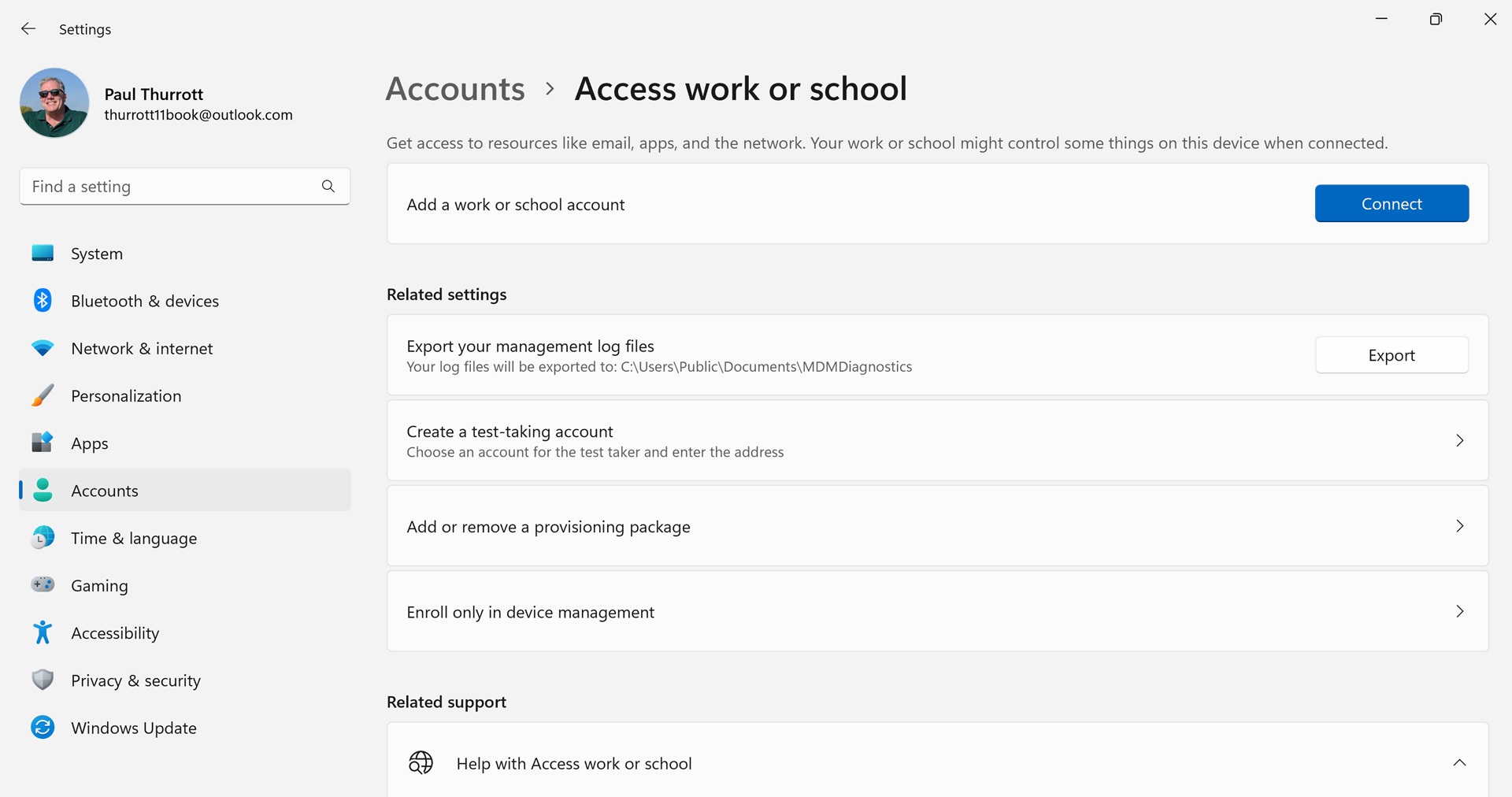
Then, click the “Connect” button next to “Add a work or school account” to set up your work or school account with this PC.
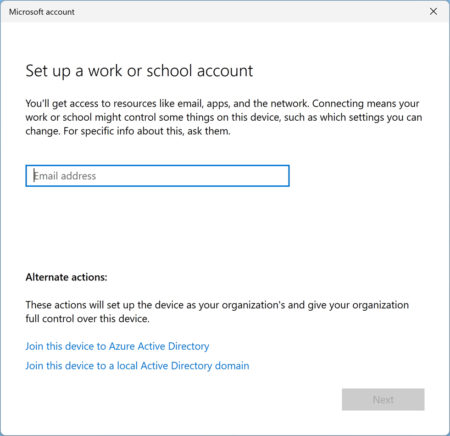
Enter your work or school email address and password as prompted and then perform whatever other authentication is required. (Most work and school accounts require some form of multi-factor authentication, or MFA, in addition to your account credentials.) Windows 11 will register your PC with your organization and apply some basic management policies so that your work or school has some control over its data.
With that complete, your organization can remotely deploy applications to your PC. And you can perform other tasks to connect with your work or school’s OneDrive (for Business) storage, email, and other apps.
Connect to your work or school OneDrive
By default, OneDrive in Windows 11 will work with the OneDrive that comes with your personal Microsoft account. But you can add your work or school OneDrive as well. That way, you can access your personal and work/school files directly from File Explorer and other apps.
To do so, locate the OneDrive icon in the Taskbar notification area (it may be in the overflow area), click it, choose the Help & Settings icon (it resembles a gear) in the window that appears, and then choose “Settings.” In the Microsoft OneDrive window that appears, navigate to the Account tab if necessary.

Click “Add an account.” In the Set up OneDrive window that appears, sign into your work or school account and authenticate as needed, and be sure to choose “Work or school” (and not “Personal”) if prompted. After you step through a configuration wizard, a File Explorer window will open to show that there are now two OneDrive accounts available: one for your personal Microsoft account and one for your work or school account.
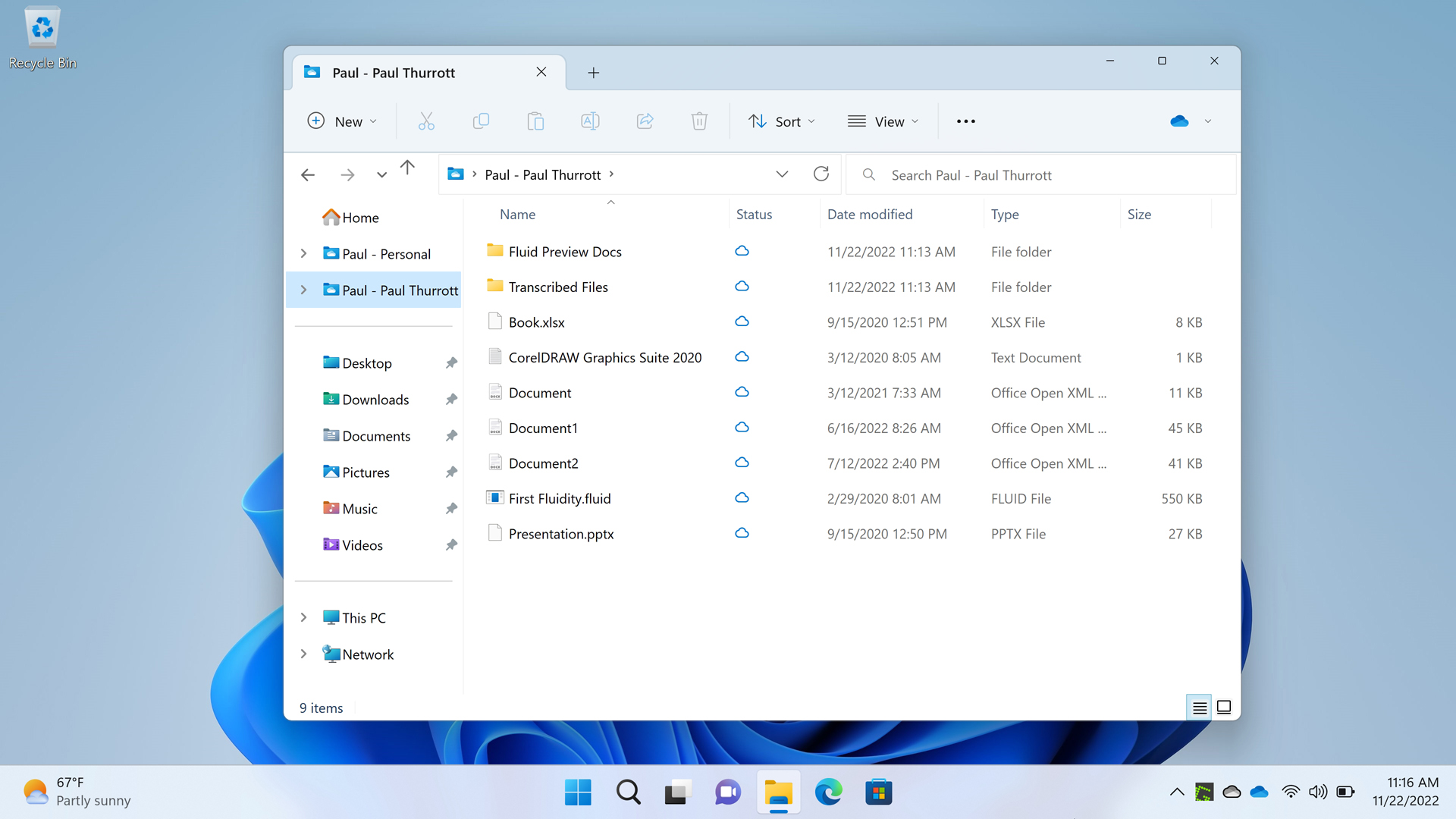
The personal account will usually be named like “[User name] – Personal” while the school or work account will be named like “[User name] – [Organization name].”
From here, the OneDrive files from each account will be available normally, side-by-side. You will also notice that there are now two OneDrive icons in the Taskbar notification area: a grayscale icon for your personal account and a blue icon for your work or school account.

Connect to your work or school email and calendar
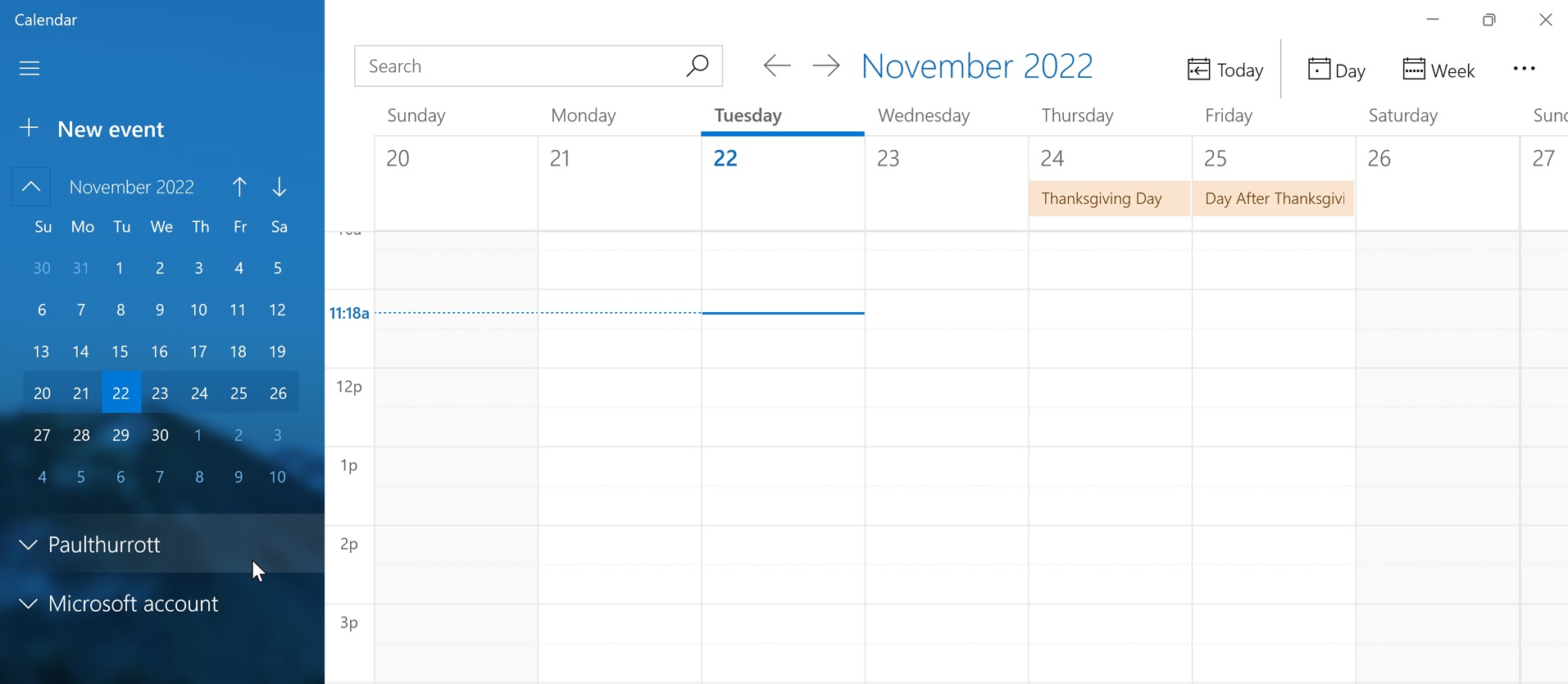
If you want to use your work or school account with the Windows 11 Mail and Calendar apps, you can do so via those apps or, more easily, via the Settings app: open Settings, navigate to Accounts > Email & accounts, and then click the “Add account” button under “Accounts used by email, calendar, and contacts.” The Add an account window appears.

Here, select Office 365 and then enter your email address as prompted. Now, when you run Mail or Calendar, you will see your work or school account available alongside your personal Microsoft account.
Use an app with your work or school account
When you connected your work or school account to your Microsoft account in Windows 11, the system automatically configured this new account to work with any relevant apps that are already installed in Windows, as well as with any relevant new apps you may install from the Microsoft Store. You can see this by opening the Settings app and navigating to Accounts > Email & accounts: if you look under “Accounts used by other apps,” you will see both your personal Microsoft account and your work or school account listed.
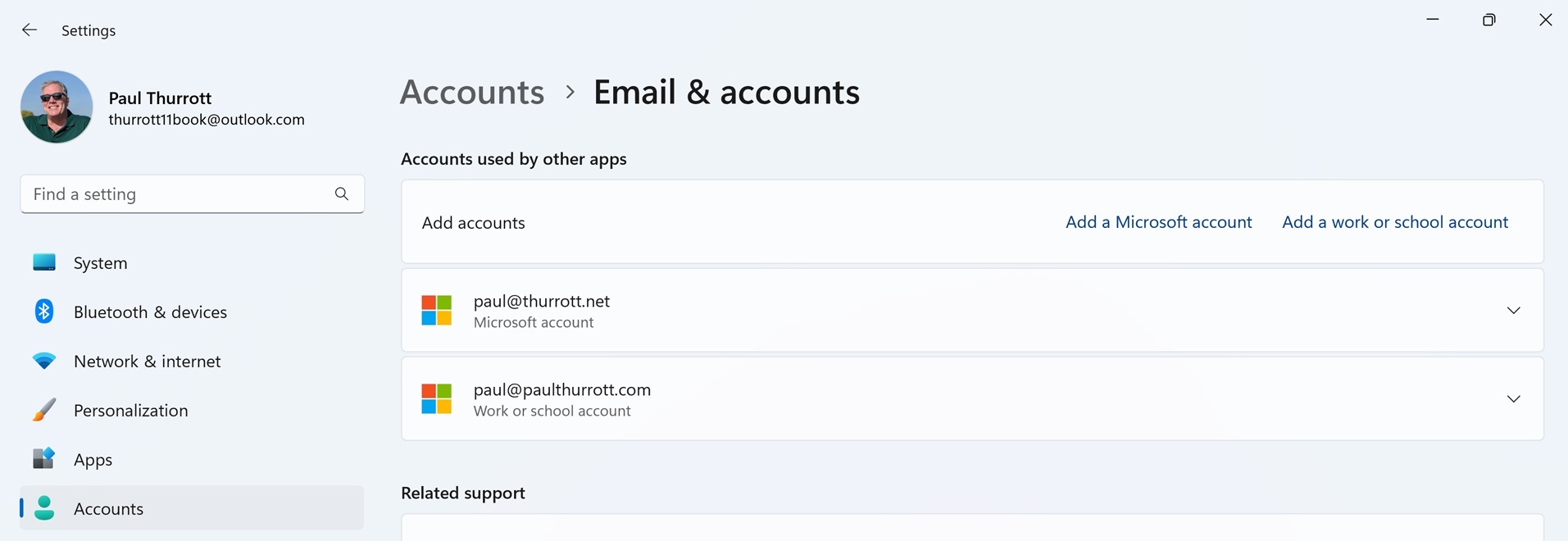
But you may also want to connect your work or school account to apps you acquire from outside the Microsoft Store. Microsoft apps, in particular, like Microsoft Teams or the apps in Microsoft Office, can be used with your work or school account.
How you connect that account varies by app. For example, in Microsoft Word and many other Microsoft Office applications, you can add your work or school account so that these applications can access the files in your OneDrive for Business storage. To do so, open Word (or another Office application) and navigate to File > Account. Then, click “Add a service” under “Connected Services,” and choose “Storage” and then “OneDrive for Business.” You’ll be prompted to sign in and authenticate.
With other apps, like Microsoft Teams, you can sign in and authenticate with your work or school account directly if you didn’t already connect this account as described above. When you do so, you are prompted to “stay signed in to all your apps.”
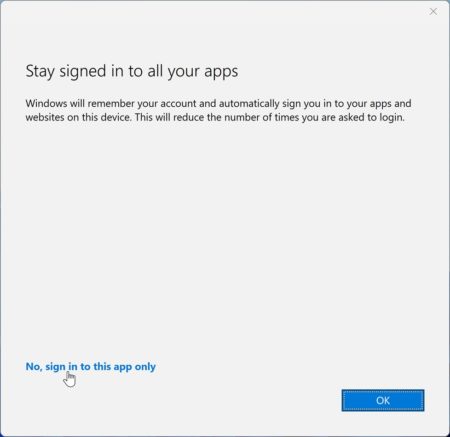
If you choose “OK,” you will automatically sign into any relevant apps and websites using your work or school account. But you can also choose the “No, sign in to this app only” link to only sign in to this one app automatically.
Sign in to Windows 11 with a work or school account
If your work or school has provided you with a laptop or other PC, it’s likely that they will require you to sign in with your Microsoft work or school account and not your personal Microsoft account. That’s because your work or school can exert greater control over the PC via the remote administration capabilities in Azure AD and possibly related mobile device management (MDM) capabilities in Microsoft Intune or a similar solution.
Azure AD compatibility requires Windows 11 Pro or higher. You can not sign into a Microsoft work or school account with Windows 11 Home.
This sign-in can occur during the Out-of-Box Experience that we discuss in Step-By-Step: The Out-of-Box Experience (OOBE). And that, predictably, is where you will see the first difference between using a personal Microsoft account and a Microsoft work or school account: in the “How would you like to set up this device?” phase of this wizard, you are given two choices: “Set up for personal use” and “Set up for an organization.”

Most people choose “Set up for personal use here.” But if you are going to sign in with a Microsoft work or school account, you should choose “Set up for an organization” instead. You will then be required to enter your work or school email address and password—and, most likely, perform some form of multi-factor authentication—and then the OOBE will continue similarly to when you sign in with a Microsoft account.

In the window that appears, click the “Join this device to Azure Active Directory” or “Join this device to a local Active Directory domain” link as directed by your organization. (It will likely be the former.) Then, sign in and authenticate with your work or school account credentials. Now, when you turn on your PC, you can choose between your Microsoft account and work or school account sign ins.
What changes when you use a work or school account
Once you boot into the Windows 11 Desktop with a work or school account, you may start noticing some differences between using this account and a personal Microsoft account.
Key differences include:
Start menu. Where the Pinned section in the Windows 11 Start menu is normally full of app shortcuts, including several that are so-called stubs for Store apps that will install when first run, those with Microsoft work or school accounts will see a much more minimalist Start menu with no superfluous app shortcuts.
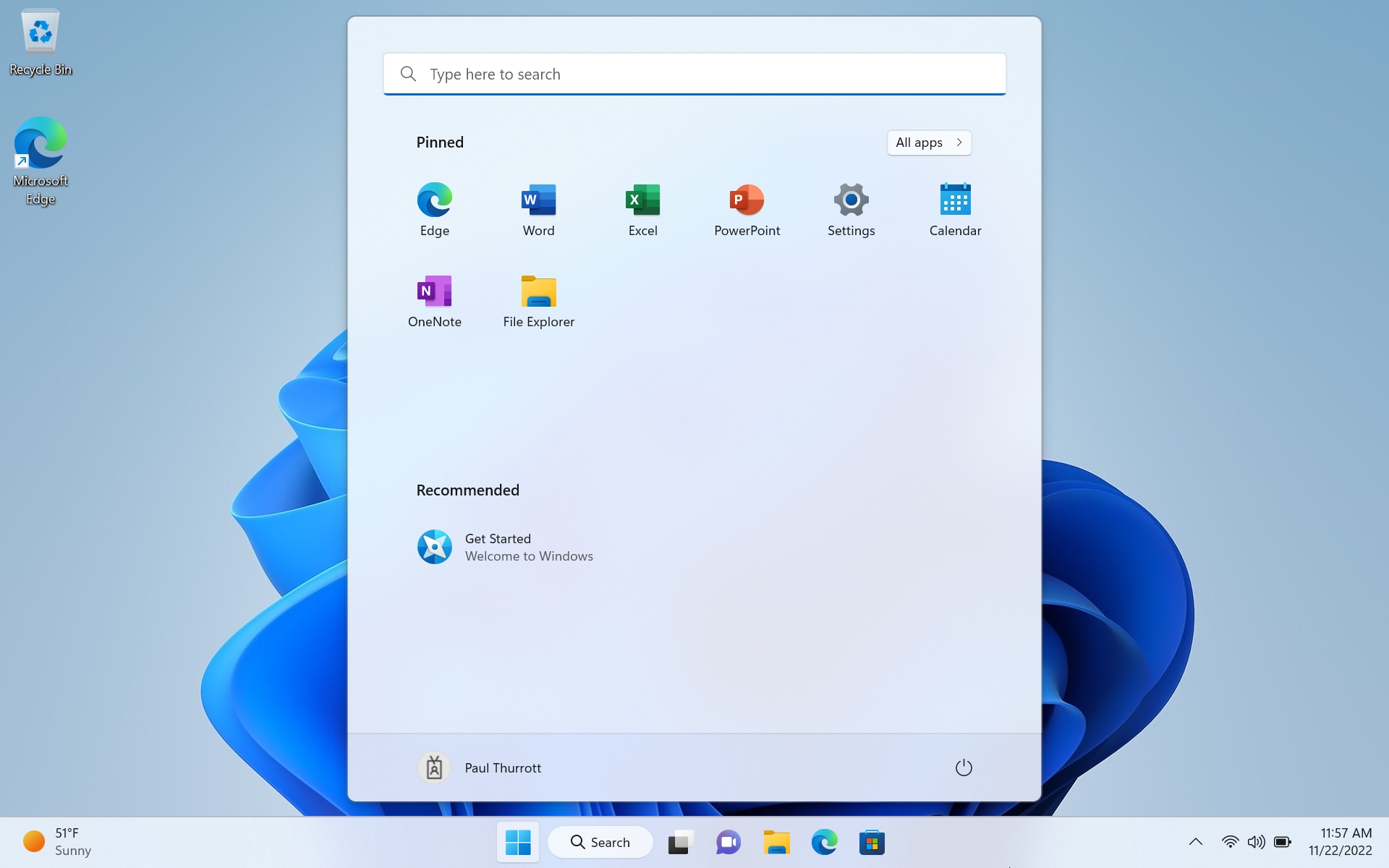
If your organization remotely installed apps on your PC, those apps will be available in the Start menu.
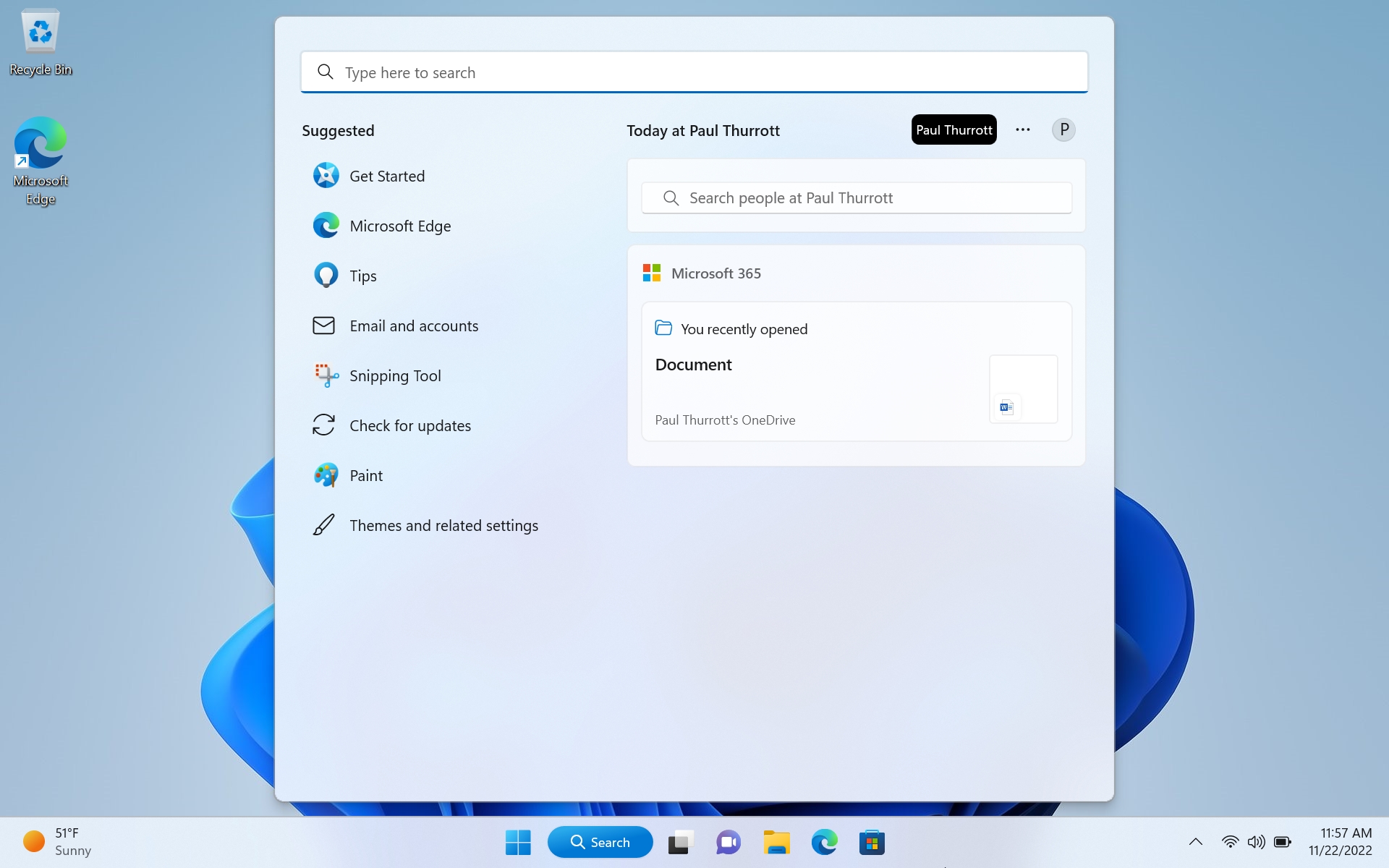
Search. In Search, we describe the Search highlights feature in Windows 11 Search as a distraction designed to trick you into using Microsoft products and services like Edge, Bing, and MSN that are monetized using Microsoft’s advertising services. But it’s not like that if you sign in with a Microsoft work or school account: instead, Search highlights presents useful links for finding people and documents in your organization.
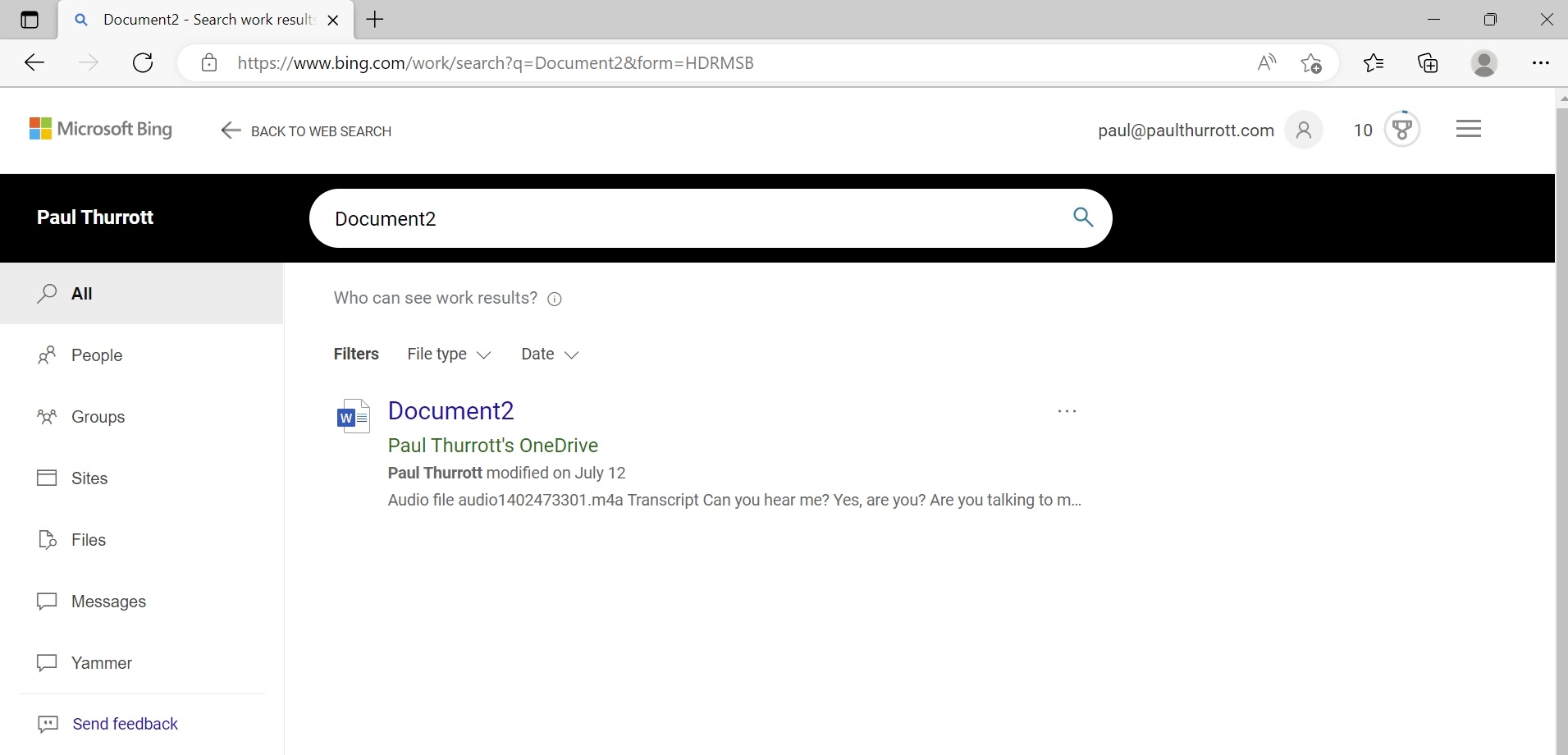
Microsoft Edge. The Microsoft Edge initial setup wizard is a bit more streamlined than is typically the case—there’s no deceptive “Let’s make the web work for you” step—but you will still want to customize (or replace) the default New tab/Home page. And while this isn’t an Edge feature per se, if you continue to use Bing as your search engine, you will discover that Bing integrates with your organization and can show you search results based on individuals you work with and the documents and other files you and your collaborators create.
OneDrive. Where those who sign into Windows 11 with a Microsoft account can access their personal OneDrive-based files with File Explorer, those who sign in with a work or school account will instead access their OneDrive for Business files with File Explorer. Conceptually, these two services work similarly, but OneDrive for Business is managed by your organization. And it has a cute blue icon in the Taskbar’s Notification area.

Connect your Microsoft account to a work or school account
Earlier in this chapter, we describe how one can sign into Windows 11 using a personal Microsoft account and then connect their work or school account so that they can access work or school resources on their PC, sign into apps with that account, and so on. The reverse is also possible, and it works similarly.
There are three main entry points for connecting your Microsoft account to the work or school account which you use to sign into Windows 11. They are:
Email, calendar, and contacts. If you would like to access the email, calendar, and contacts associated with your Microsoft account in the Windows 11 Mail and Calendar apps, and elsewhere, you can set this up in the Settings app: navigate to Accounts > Email & accounts and click the “Add account” button next to “Add a new account” under the “Accounts used by email, calendar, and contacts.” section.
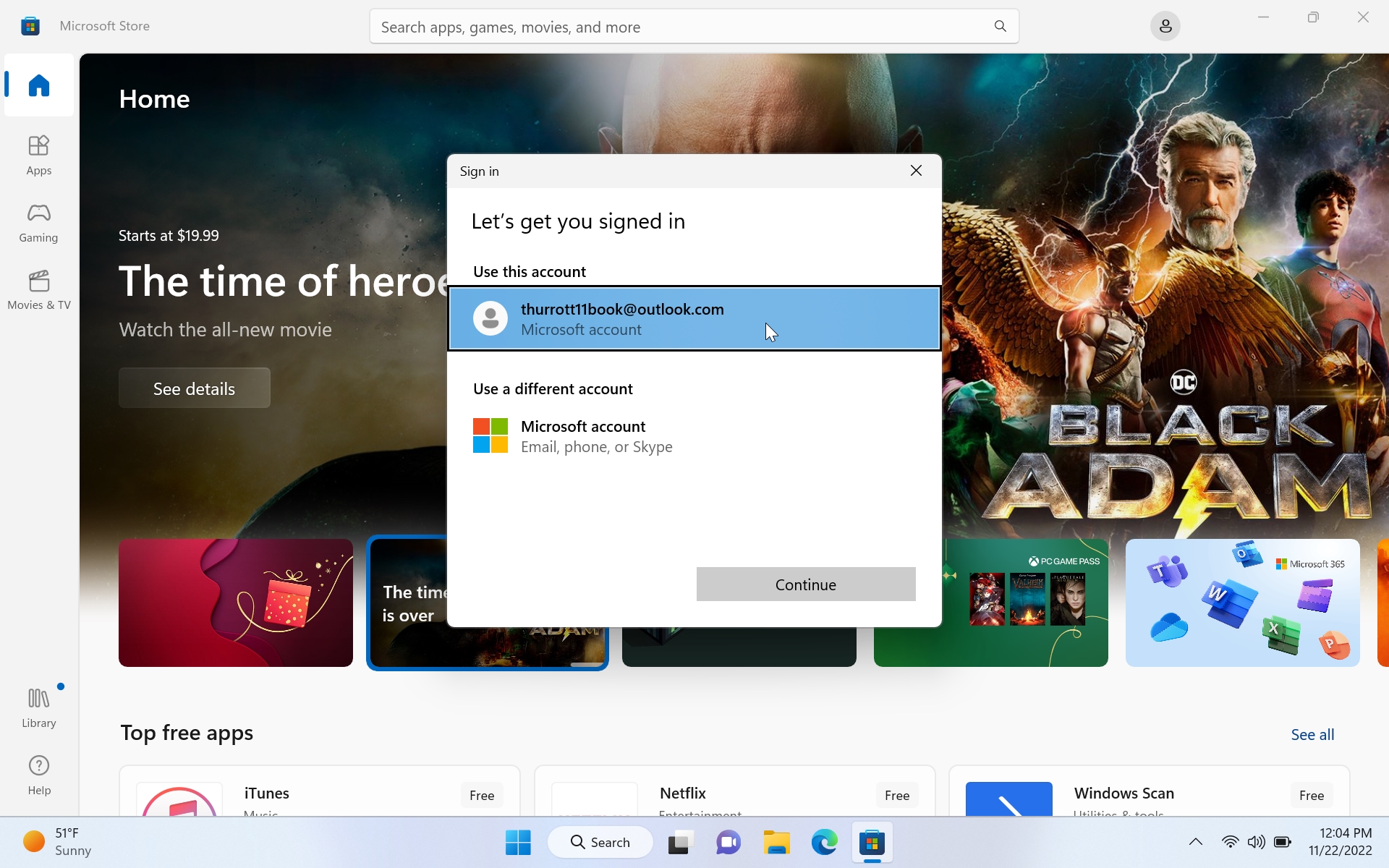
Apps. If you would like to use your Microsoft account in individual Microsoft Store apps, including those that come with Windows 11, you can do so on an app-by-app basis—by signing out and then signing in with your Microsoft account—or you can configure your Microsoft account to always be a choice. To do so, open the Settings app, navigate to navigate to Accounts > Email & accounts, and then click the “Add a Microsoft account” link next to “Add accounts” under the “Accounts used by other apps” section. Once you’ve added the account, you can select it to configure whether Microsoft apps can automatically sign you in with MSA or ask you first. And when you run compatible apps, like the Microsoft Store app, you can optionally sign in with your MSA and access whatever apps, games, or content you own.
OneDrive. File Explorer will integrate with the OneDrive (for Business) storage that is associated with your Microsoft work or school account automatically. But you can add your personal Microsoft account’s OneDrive to File Explorer as well. To do so, open OneDrive settings, navigate to the Account tab, and use the “Add an account” button to add your Microsoft account’s OneDrive. Once it’s configured, the OneDrive files from each account will be available normally, side-by-side, in File Explorer. And you will notice that there are now two OneDrive icons in the Taskbar notification area: a grayscale icon for your personal account and a blue icon for your work or school account.


Gain unlimited access to Premium articles.
With technology shaping our everyday lives, how could we not dig deeper?
Thurrott Premium delivers an honest and thorough perspective about the technologies we use and rely on everyday. Discover deeper content as a Premium member.