Reading with Microsoft Edge (23H2)
- Paul Thurrott
- Apr 28, 2024
-
0
Microsoft Edge provides all the standard reading features for the web that you expect, but it also goes well beyond that by offering a Reader mode experience for web articles, comprehensive built-in PDF (portable document format) reading and annotation capabilities, and a Read aloud feature that works with both web articles and PDF files.
Read articles on the web
Microsoft Edge lets you browse the web and read articles of interest as you would with other web browsers. But it also offers integrated tools that make reading more immersive and distraction-free.
Like other web browsers, Microsoft Edge provides a true full-screen mode you can toggle by typing F11. It also supports related keyboard shortcuts for zooming the view:
Zoom in: CTRL + –
Zoom out: CTRL + +
Return to default zoom: CTRL + 0
Enter Reader mode with Immersive Reader
Microsoft Edge offers a unique Reader mode experience for web articles called Immersive reader that hides everything on the web page you’re reading except for the article text and graphics.
You can’t configure Immersive reader to appear automatically. Instead, you turn it on manually when you’re reading a web article. To do so, navigate to a web article you wish to read and then click the Immersive reader icon that appears in the right of the Address bar.

The Immersive reader icon only appears when Edge is displaying a web article.
You can also type F9 to toggle Immersive reader.
When you do, the article reloads in a themed Immersive reader view with just the article text and graphics.
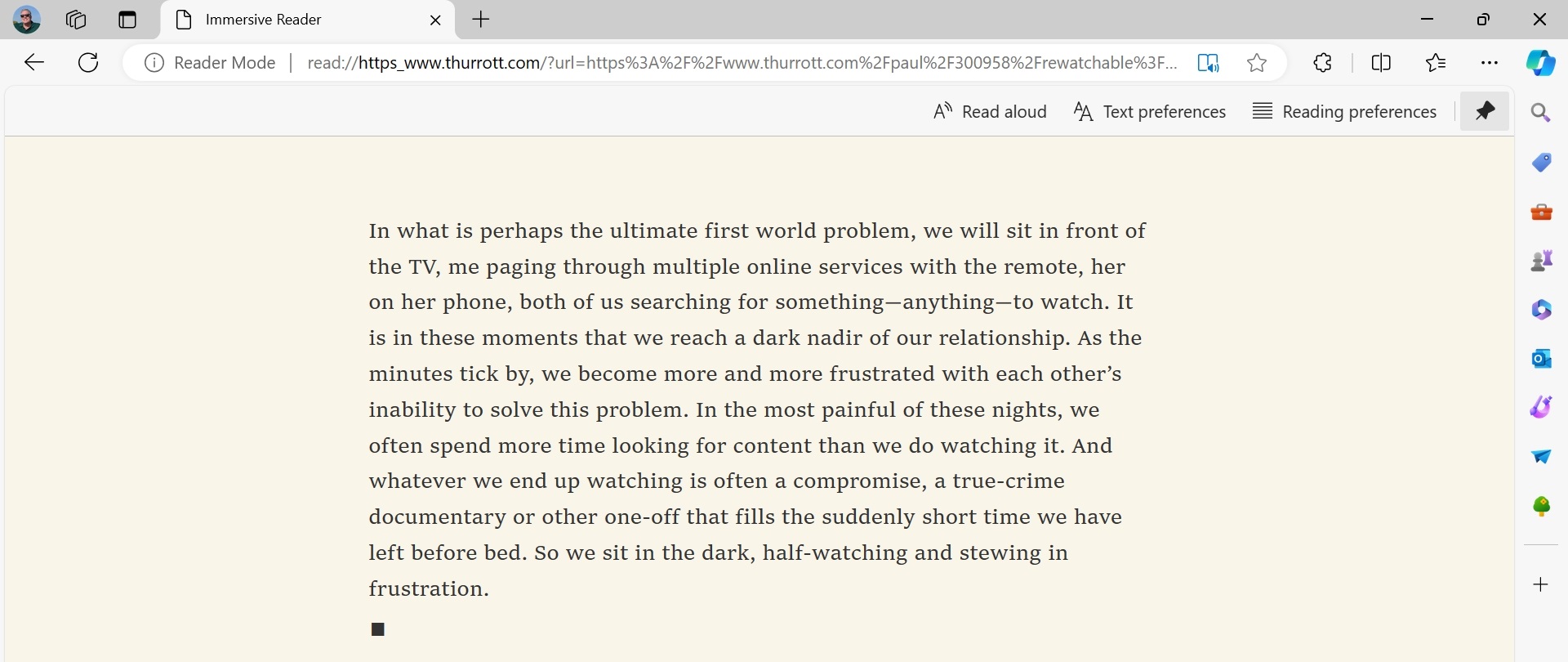
To exit Immersive reader, click the “Back” button in the toolbar.
Or, just type ALT + <.
Immersive reader displays a toolbar by default that provides several useful options.

This toolbar can be configured to auto-hide. If you don’t see it, just click anywhere in the browser window.
These options include:
Read aloud. This feature will read the web article aloud to you.
Read aloud is described in more detail later in this chapter.
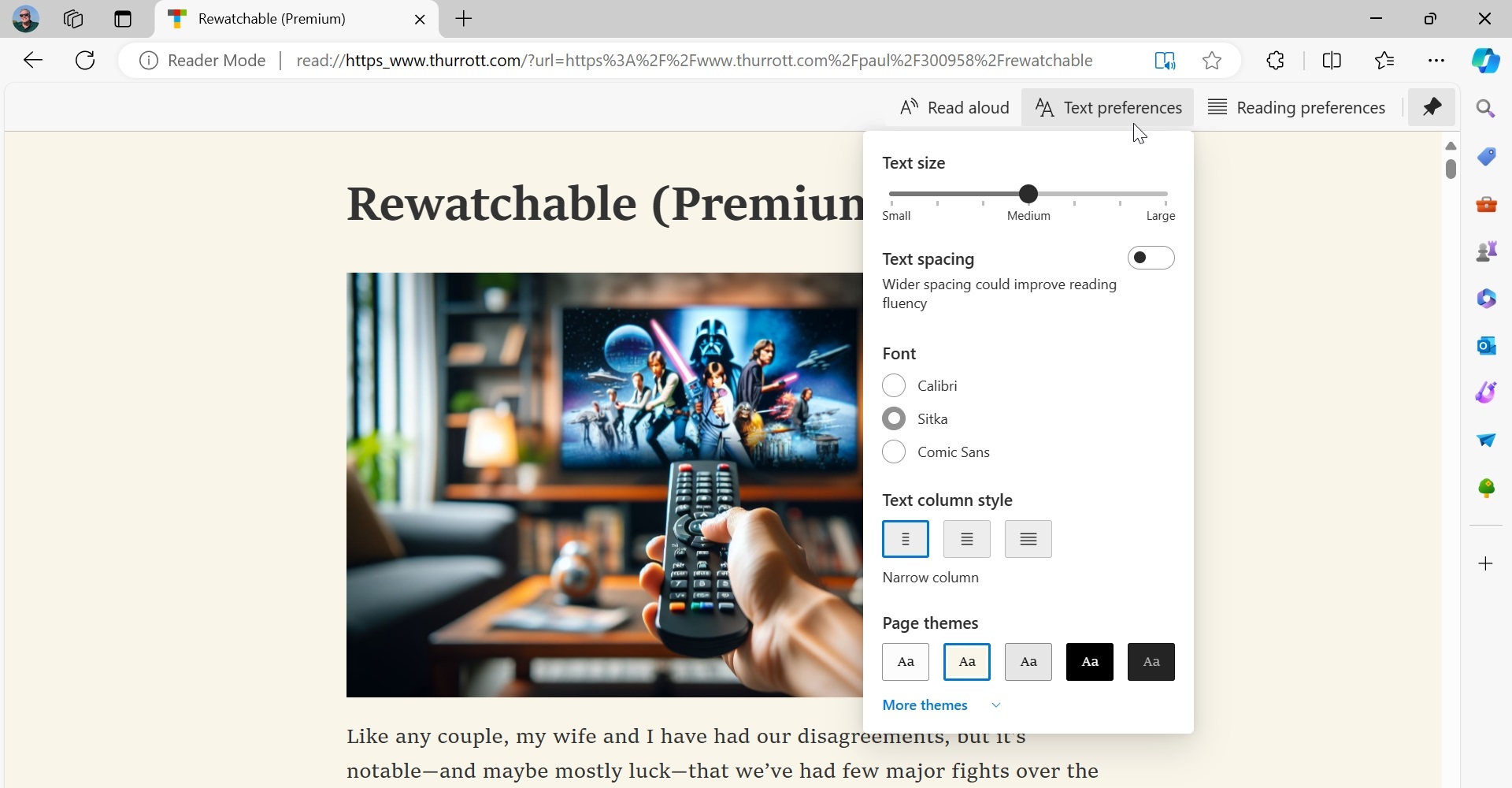
Text preferences. This item opens a pane that lets you customize the Immersive reader’s text size, text spacing, font, column style, and theme so that it looks exactly the way you like.

Reading preferences. Here, you can enable and configure two useful reading improvement tools: A line focus feature that will highlight one, three, or fives lines of text (your choice) as you read, and a language translation feature that can translate the article into the language of your choice.
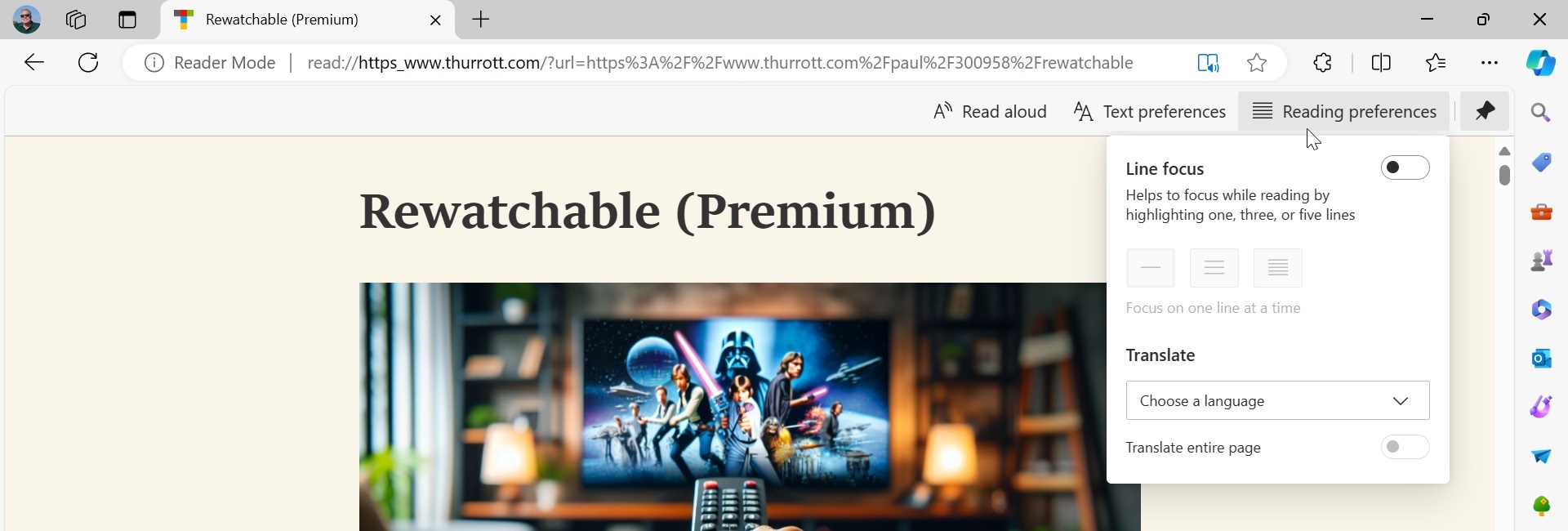
These features are also discussed later in this chapter.
Pin/Unpin toolbar. To keep this toolbar visible all the time, select the “Pin/Unpin toolbar” button. It works like a toggle.
A> Some browser features, like printing and displaying the browser in full-screen mode, also work well with Immersive reader. If you print an article while in this view, for example, it will print it in the style used by Immersive reader.
Use Immersive reader with a selection of text
While Immersive reader is typically used to display an entire web article without distractions, you can also use it to display just a specific text selection.
To do so, select some text in a web article, right-click it, and choose “Open selection in Immersive Reader.”
Let Edge read the current article with Read aloud
The Read aloud feature in Immersive reader can read a web article aloud to you. It’s like listening to an audiobook, and not at all robotic. In fact, some of the voices Microsoft provides with Read aloud sound quite natural.
To use Read aloud, open Immersive reader and select the “Read aloud” button in its toolbar. When you do, the Read aloud controls will appear in the toolbar and Microsoft Edge will begin reading the article aloud to you, highlighting the current word in yellow as it goes.
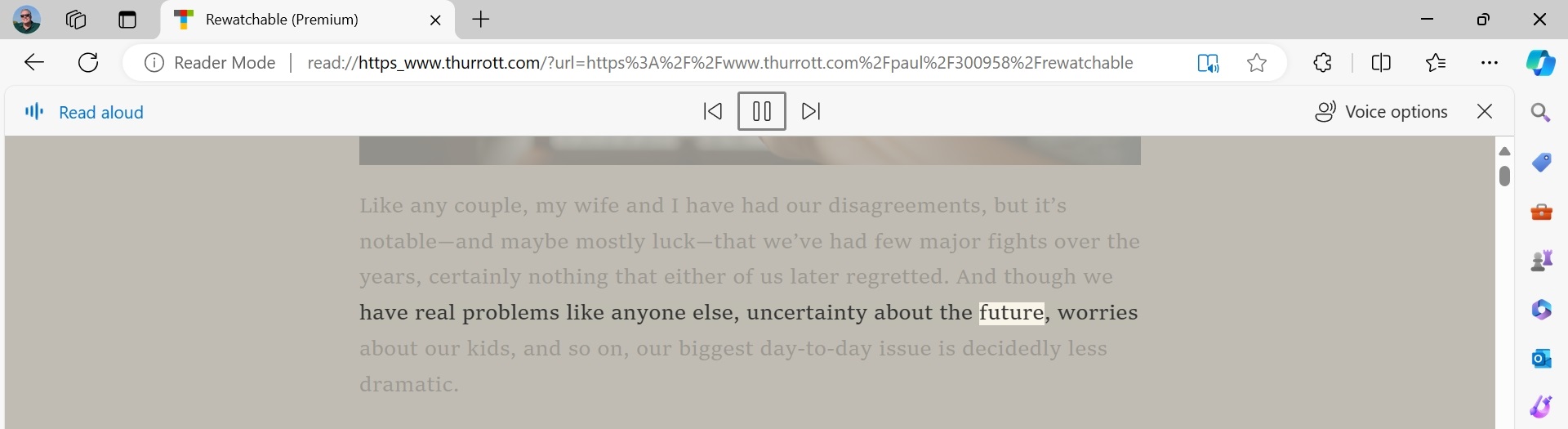
The Read aloud toolbar has buttons for Play/Pause and for jumping to the previous or next paragraph. And the Voice options button can be used to configure the speed of playback and to choose a different voice.
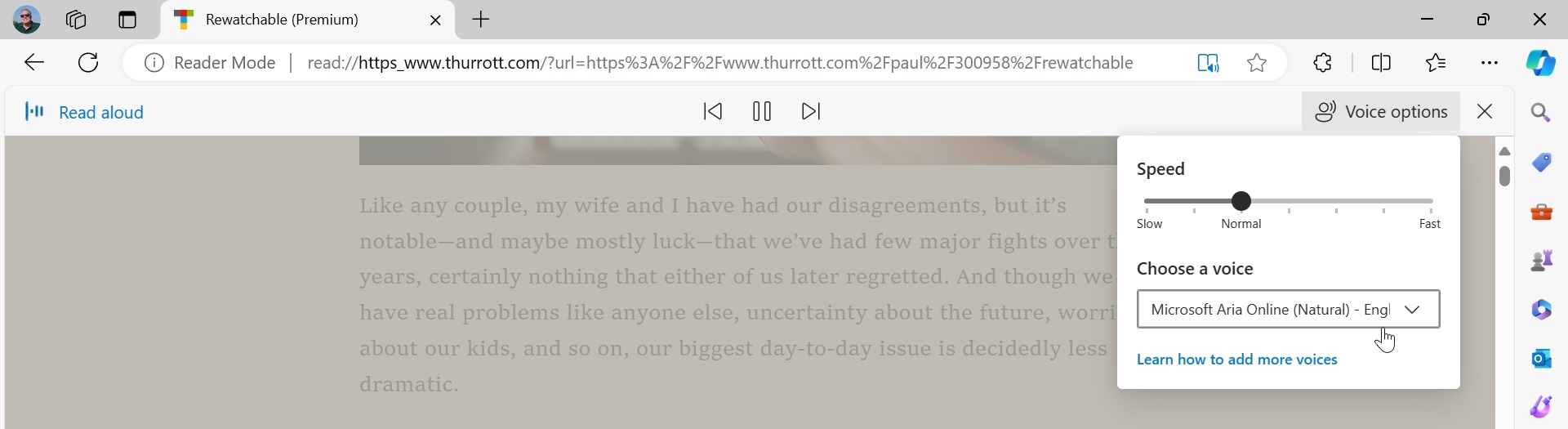
You can also toggle Read aloud by typing CTRL + SHIFT + U. This works in both Immersive reader and when you’re viewing a web page normally.
Improve your reading skills with Immersive reader
Microsoft Edge furthers the distraction-free reading experience provided by Immersive reader with two additional tools, Line focus and Translate, that can be found in Reading preferences.
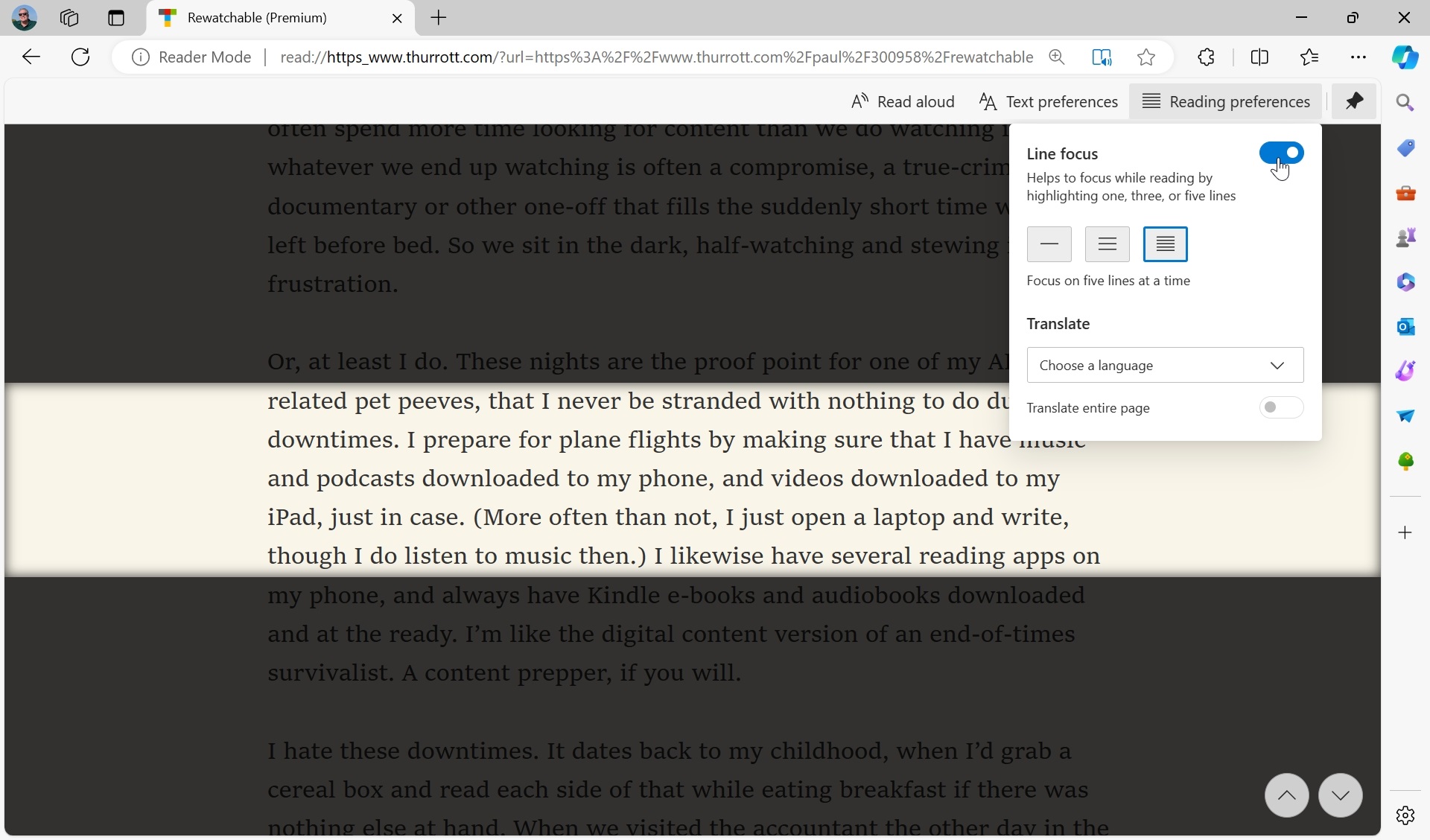
Line focus helps you stay focused while reading by highlighting one, three, or five lines of text (your choice) and dimming the rest of the article. You can navigate normally when in this mode, or use the “Previous” and “Next” buttons in the bottom right.
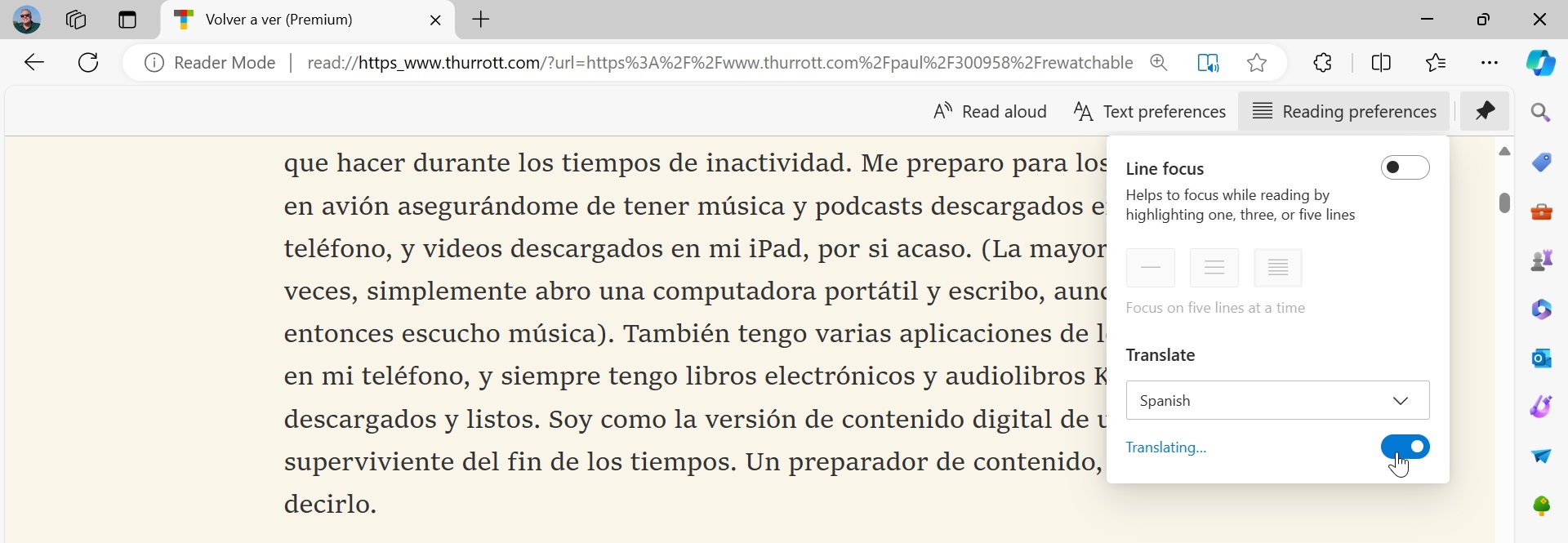
The Translate feature can be used to translate the entire article into the language of your choice.

Where did it go?
Until 2024, Microsoft Edge also offered Grammar tools and a Picture dictionary feature. But these are no longer available because of low usage. We’re not aware of any browser extensions that can directly replace those features, but there are many high-quality extensions related to spelling, grammar, and reading. Two we use and recommend are Language Tool and Grammarly.
Read and annotate a PDF file
Microsoft Edge isn’t just for browsing the web and reading web articles: It can also be used to read and annotate PDF (portable document format) files.
To read a PDF file, simply open one anywhere in your file system or on the web, and it should open in Microsoft Edge, which is configured as the default application for this type of file.
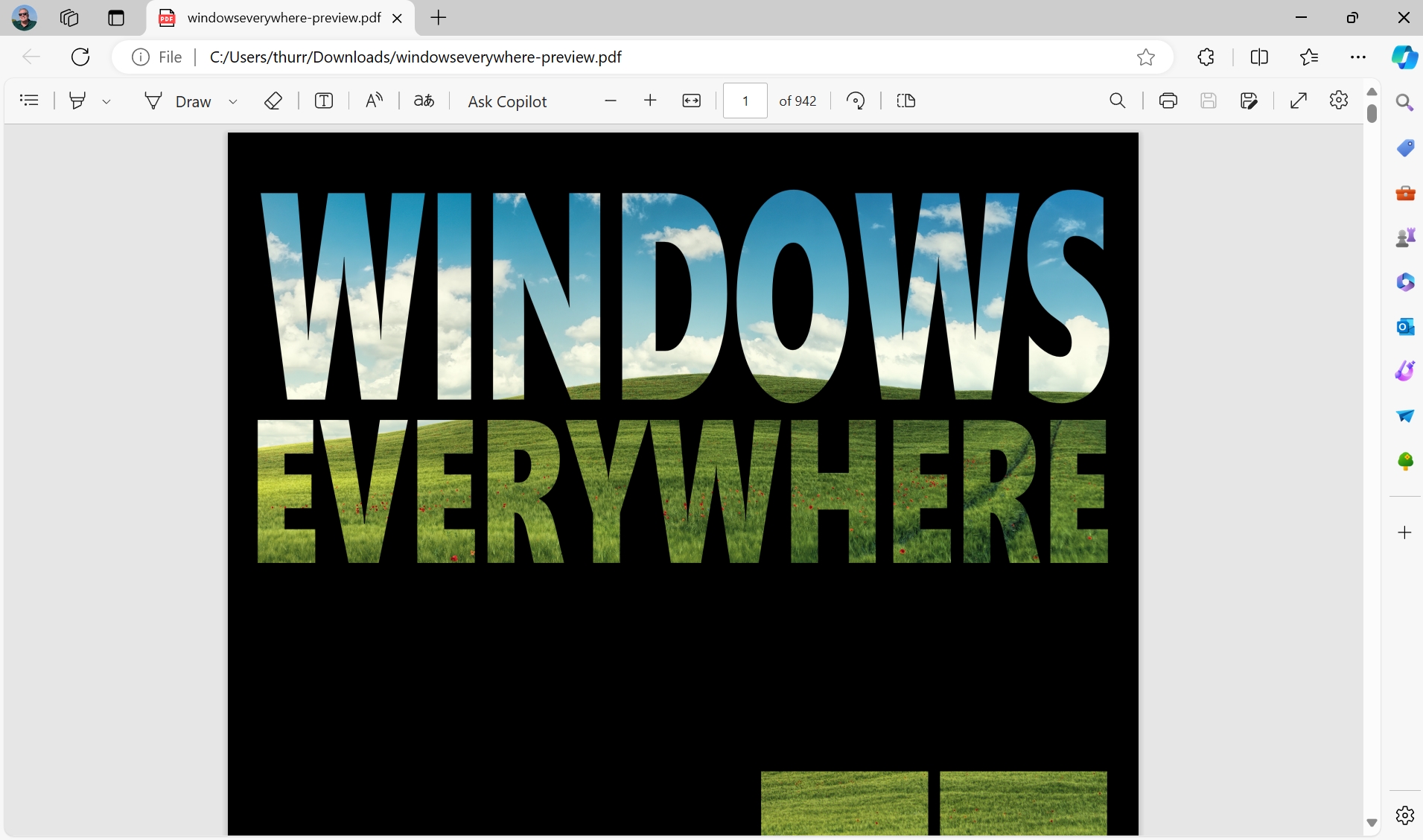
Microsoft Edge doesn’t offer a Reading view for PDFs as it does for web articles because these documents are purposefully structured so that they always appear as the author or publisher intended.
As with Immersive reader, Microsoft Edge displays a toolbar when you view a PDF file. And like that toolbar, the PDF toolbar can be toggled on and off, albeit in an inconsistent manner: Click the “Settings and more” (gear) button in the far right of the toolbar and toggle the “Pin toolbar” option in the drop-down menu that appears. If you uncheck this option, the toolbar will auto-hide, and you can display it by mousing up to the top of the document.
The following commands are available in this toolbar when viewing a PDF file with Microsoft Edge.
Contents. Click this button to display a Table of contents representing the structure of the document in your choice of Thumbnail and List views. This interface lets you quickly navigate to other parts of the document by clicking on a page in Thumbnail view or any item in List view.
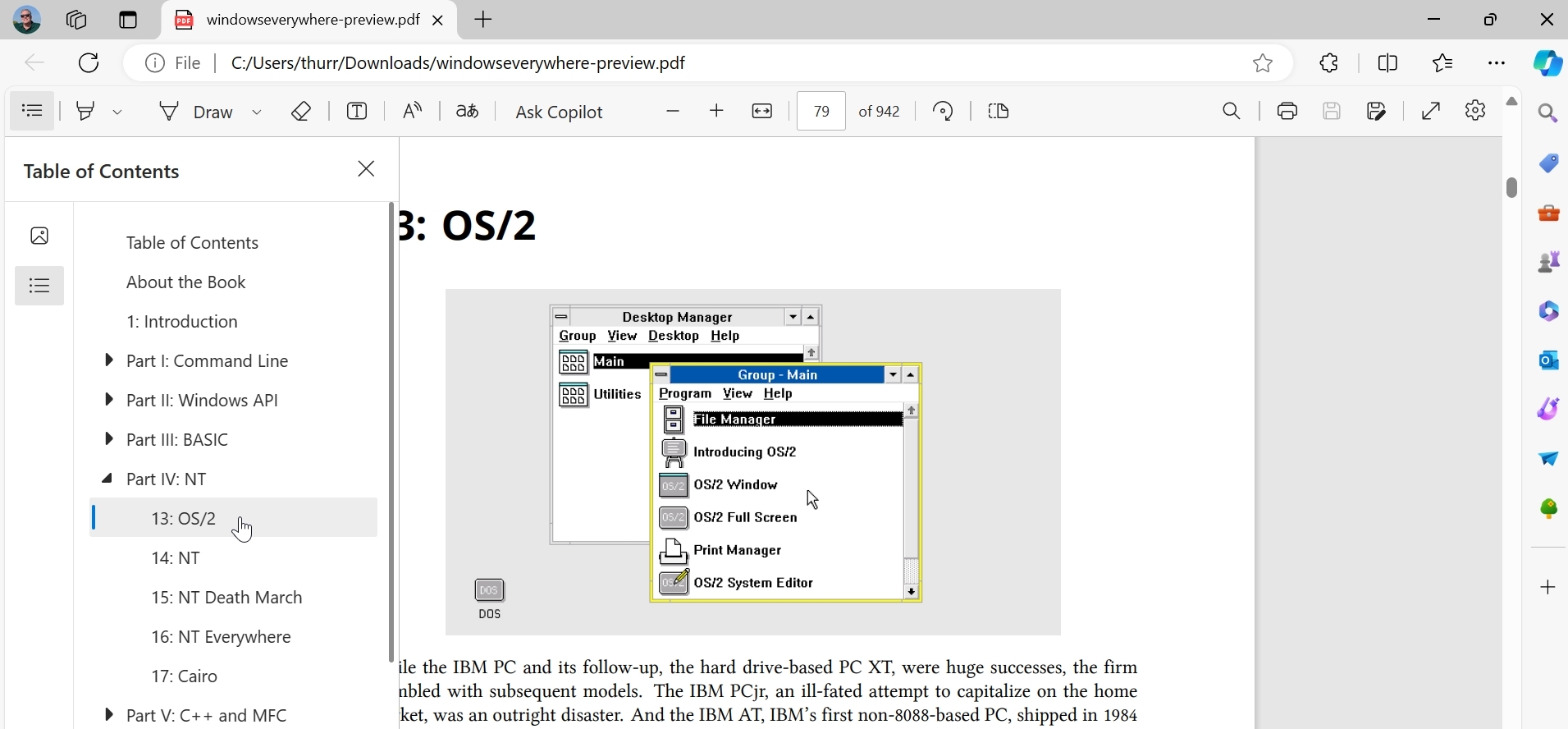

Highlight. This command lets you highlight content–or, optionally, just text–within the current document. You can select a color and thickness from its drop-down menu.
Draw. You can draw on a PDF using your PC’s mouse or touchpad, your finger, or a smart pen, depending on its capabilities. You choose between several different colors and pen widths using its drop-down menu.
Erase. This button turns the mouse cursor into an eraser tool so you can erase any drawing or highlighting you’ve done in the current document. To erase an item, toggle “Erase” on and then click that item.
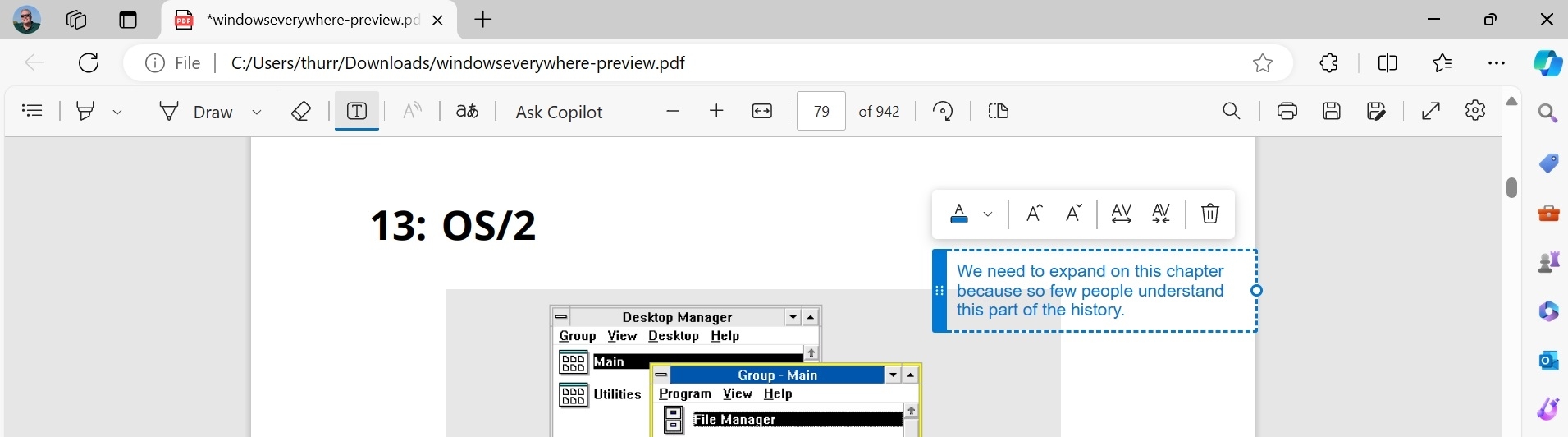
Add text. This button is used to annotate the PDF document with a block of text. When you select this button, the mouse cursor changes into a text insertion shape. And when you click anywhere in the document, a new text block (“Start typing here”) appears under a floating toolbar with text color, sizing, spacing, and deletion options appears. You can adjust the position and width of the text block at any time by grabbing its right and left sides, respectively, with the mouse cursor and dragging.
Read aloud. As with the similar feature for Immersive reader, this lets you listen to the document as if it were an audiobook.
Translate. This opens a Translate pane on the right and prompts you to select some text to translate it into the language of your choice. You can then suggest an edit (to help improve the underlying Microsoft Translator service), listen to the translation, or copy it to the Clipboard using the buttons under the translated text.
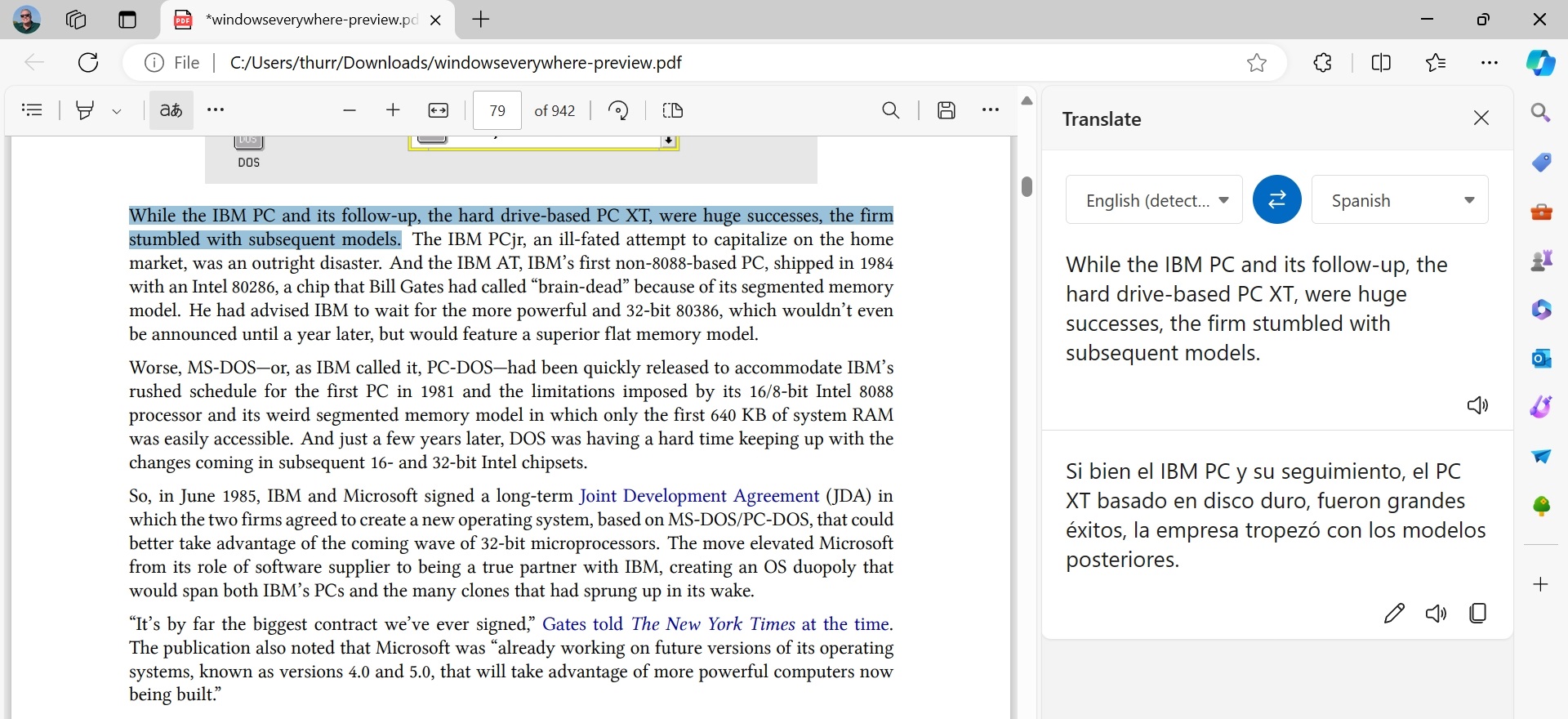
What you can’t do is automatically translate the entire document.
Ask Copilot. In what is inarguably the most impressive feature here, the “Ask Copilot” button to invoke Microsoft Copilot in the Microsoft Edge sidebar so you can learn more about the displayed PDF. From here, you can choose from a few suggestions, ask Copilot questions about the document, or have it summarize or rewrite it.

Remember that you can open Copilot in the Edge sidebar at any time and use this AI-based tool to summarize any document it can display, including web-based articles and other webpages.
Zoom out and Zoom in. The handy “Zoom out” (“-“) and “Zoom in” (“+”) buttons can be used to zoom out and into the document, respectively.
Here, too, you can also the keyboard shortcuts CTRL + – [minus] and CTRL + + [plus], respectively. And CTRL + 0 will return the view to the default (100%) zoom level.
Fit to width/Fit to page. Use this button to toggle the display of the document between full-width and full-page views.
You can also type CTRL + \ to toggle the display between full width and full page views.
Page number. The PDF toolbar displays the current page number and the total number of pages, but you can also select this “Go to any page” box, type a page number, and navigate immediately to that point in the document.
Rotate. If you select this button, the document will rotate 45 degrees to the right. This is useful for viewing scanned documents that are not oriented correctly.
Alternatively, you can type CTRL + ] to rotate the document to the right, or CTRL + [ to rotate it to the left.
Page view. Here, you can determine whether to view a single page at a time onscreen or two pages side-by-side.
Find. This command helps you navigate to each instance of the text you wish to find within the PDF document.
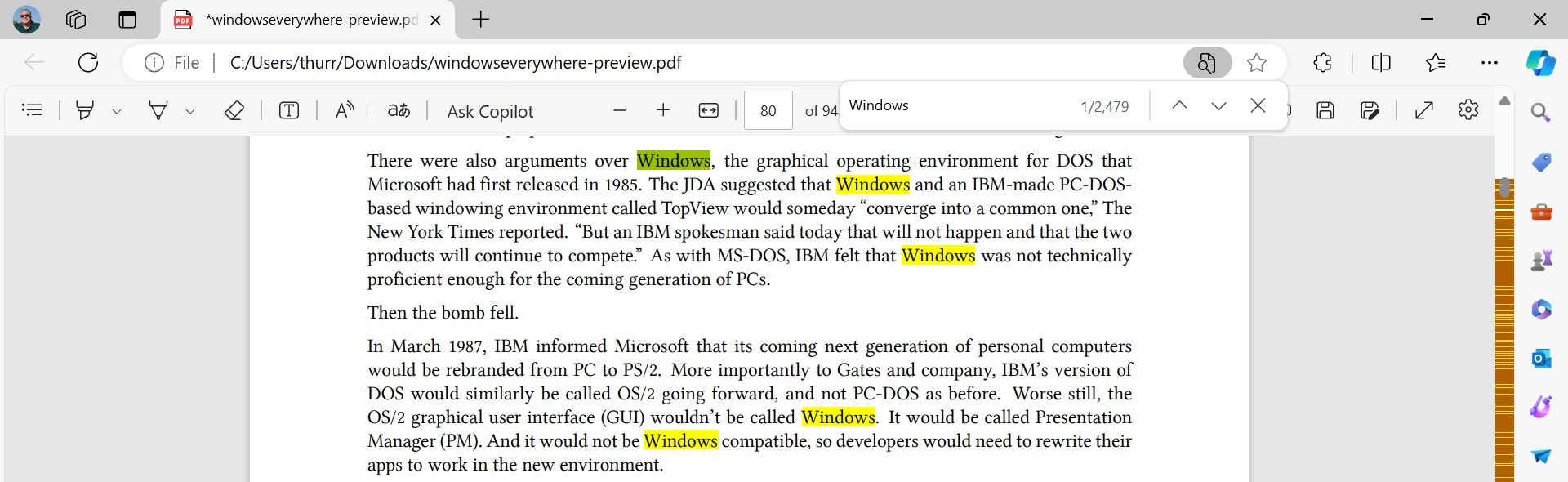

You can also type CTRL + F to access Find, as you would with a webpage.
Print. Use this button to print the PDF, obviously.
Save. This button lets you save as web-based PDF to your PC. But it can also be used to save any annotations you’ve made to a locally stored PDF.
Save as. Here, you can save an existing document in a new location and/or with a new name.
Enter PDF full-screen. As you might expect, this button displays the PDF in a single page full-screen view. That said, it’s otherwise limited: you can’t change the zoom level, display the table of contents, access the PDF toolbar, or make any changes. To exit PDF full-screen mode, mouse up to the top of the display to reveal a Close (“x”) button.
Or, just type ESC.
Oddly, if you use the full-screen mode for Edge–as opposed to “Enter PDF full-screen”–you can still access the PDF toolbar, change the zoom level, make annotations and so on.
To enter this full-screen mode, type F11.
Settings and more. This final toolbar button displays a menu with three choices: “Pin toolbar” (which can be toggled), “Hide all annotations,” and “View document properties.”
The Edge PDF toolbar used to provide a “Share” button that launched the system Share pane so you could share the PDF with others using Nearby sharing or any compatible apps. The button is gone now, but the functionality remains: You can access Share by opening the Edge “Settings and more” menu and navigating to More tools > Share. (Oddly, there’s no keyboard shortcut.)
Fill in a PDF form
The PDF document format is often used by companies to supply forms that you can fill out and return to them. For this reason, Microsoft Edge provides integrated PDF form fill capabilities so that you can enter the required information and then save the PDF file with the data you entered. From there, you can print it out, email it back to the sender, or otherwise share the edited file with others.
Filling out a form in a PDF file is straightforward: Simply select each field, in turn, and type.
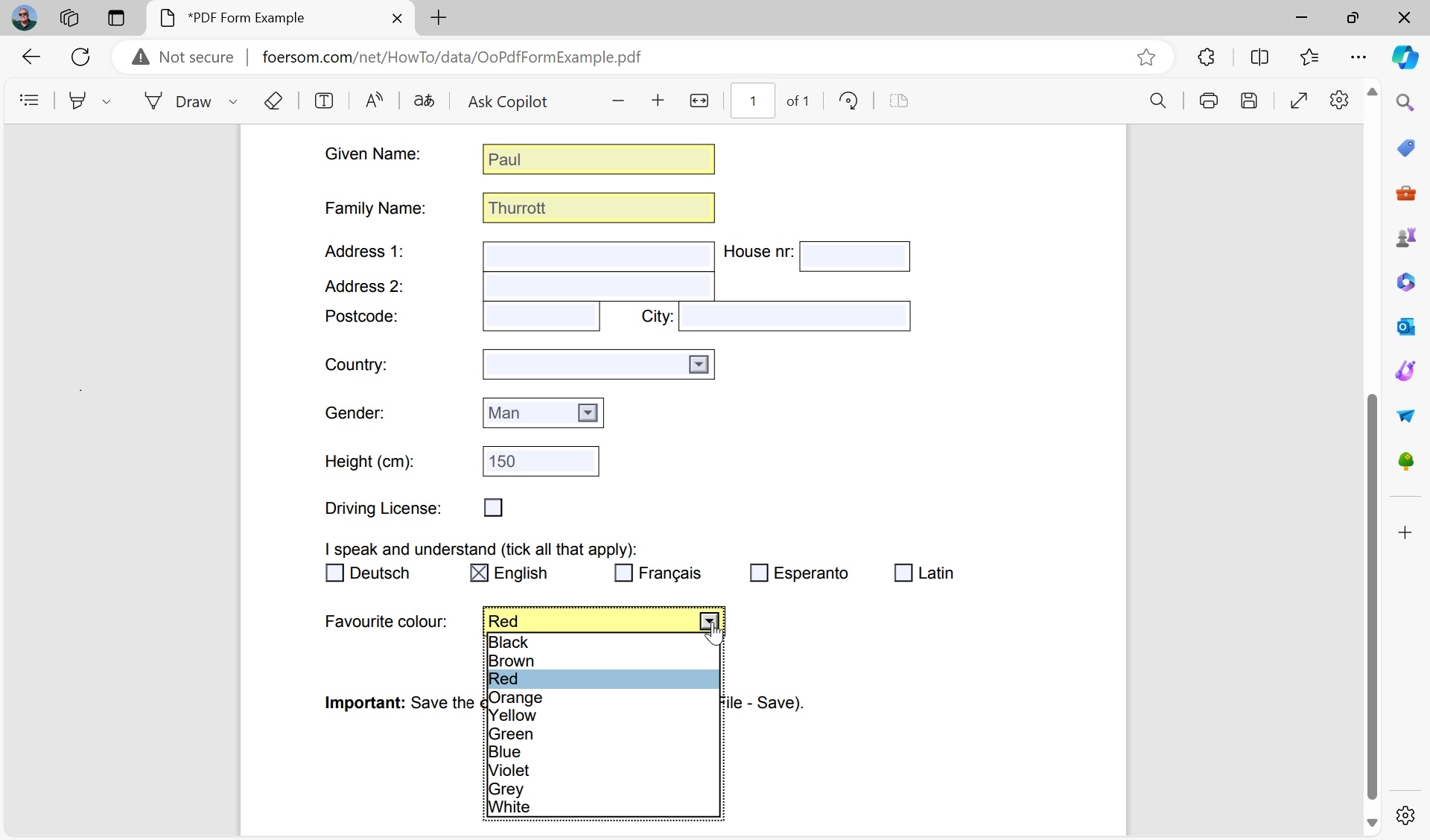

Tap the TAB key to jump to the next field in the form.
When you’re done, click “Save” or “Save as” as needed.

Gain unlimited access to Premium articles.
With technology shaping our everyday lives, how could we not dig deeper?
Thurrott Premium delivers an honest and thorough perspective about the technologies we use and rely on everyday. Discover deeper content as a Premium member.