Screenshots and Screen Recordings
- Paul Thurrott
- Apr 10, 2023
-
5
Windows 11 offers several different methods by which you can create a screenshot, a still image that represents the contents of your PC’s display. It also includes an app that let you create video recordings of what’s happening on-screen.
Create, save, and share a screenshot
Here are the most popular methods for capturing a screenshot in Windows 11.
Use Print Screen to copy the screen or a window to the Clipboard
Every PC keyboard includes a Print Screen key, usually identified as PRT SC or similar, that, when pressed, copies a screenshot to the Windows Clipboard. From there, you can paste this image into Microsoft Paint, or any other image editor or application that can accept image formats, and then save it to disk and share it with others.
A> You may be wondering why this key is called Print Screen. After all, it doesn’t print anything. But it used to: Print Screen dates back to the original IBM PC, which ran a text-only operating system called PC-DOS, which was made by Microsoft and sold by them as MS-DOS. In that pre-Windows era, Print Screen literally did print the text on-screen to whichever dot matrix printer was attached to its parallel port. But with the advent of graphical user interfaces like Windows, its usage changed and it is now used the capture the screen as an image.
When you press the Print Screen key, or PRINT SCREEN, an image of the entire screen–minus the mouse cursor–is copied to the Clipboard. If you would rather capture only the currently focused window, press ALT + PRINT SCREEN instead.
The first time you do this, OneDrive will display a notification asking if you would like to automatically save each screenshot that you take with Print Screen.
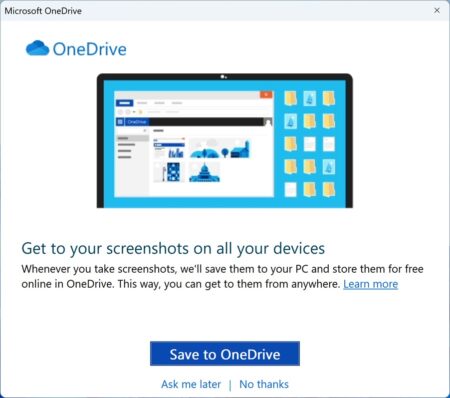
If you accept this offer, screenshots taken with Print Screen will no longer be ephemeral. Instead, each will be saved in PNG format to a new Screenshots folder found in your Pictures folder in OneDrive. These images will be available on the PC you’re using as well as from the web and any other devices that are connected to your OneDrive.
If you deny this offer but later change your mind, you can configure OneDrive to automatically save screenshots by opening OneDrive settings and enabling the option “Save screenshots I capture to OneDrive” in the Sync and backup page.
Automatically save a screenshot as a file
Windows 11 also supports an alternate keyboard shortcut to Print Screen that provides two enhancements: it subtly flashes the screen to confirm that a screenshot was taken, and it automatically saves the resulting images to the Screenshots folder in your user account’s Pictures folder.
To use this method, type WINKEY + PRINT SCREEN.
As you can probably guess, you can also type WINKEY + ALT + PRINT SCREEN to capture just the currently focused window. However, this keyboard shortcut displays an Xbox Game Bar notification banner and, even more confusingly, saves the resulting screenshot in a different location, the Captures folder in your user account’s Videos folder. This is because the WINKEY + ALT + PRINT SCREEN keyboard shortcut is reserved by default by the Xbox Game Bar, which is yet another method for taking screenshots in Windows 11, albeit one designed for games.
You can learn more about this feature in the Xbox Game Bar chapter.
Use Snipping Tool to capture the screen, a window, or an area of the screen
Print Screen works well enough, but Windows 11 also includes an application called Snipping Tool that can take screenshots (and, as described later in the chapter, make screen recording videos). This tool is more configurable than Print Screen, and it supports some basic editing features too. And if you prefer using it, you can even configure the Print Screen key to open Snipping Tool instead of saving a screenshot to the Clipboard.
You can easily find Snipping Tool in Start using Search.
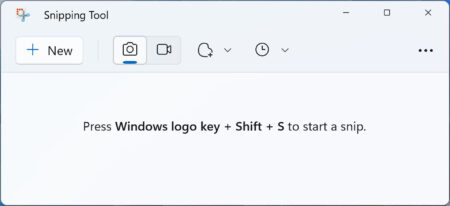
From this simple window, you can start a new snip, or screenshot, switch to Recording mode (as described below), choose a default snipping mode–rectangle, window, full-screen, or free-form–and optionally configure a delay of 3-, 5-, or 10-seconds.
To start a new snip (take a screenshot), click “+ New”.
Or, just type WINKEY + SHIFT + S. This screenshot will work even if Snipping Tool is not running, so it’s a much faster way to get right to where you want to be.
When you do, the screen dims. And unless you’ve chosen Full-screen mode, the Snipping Tool overlay appears at the top.
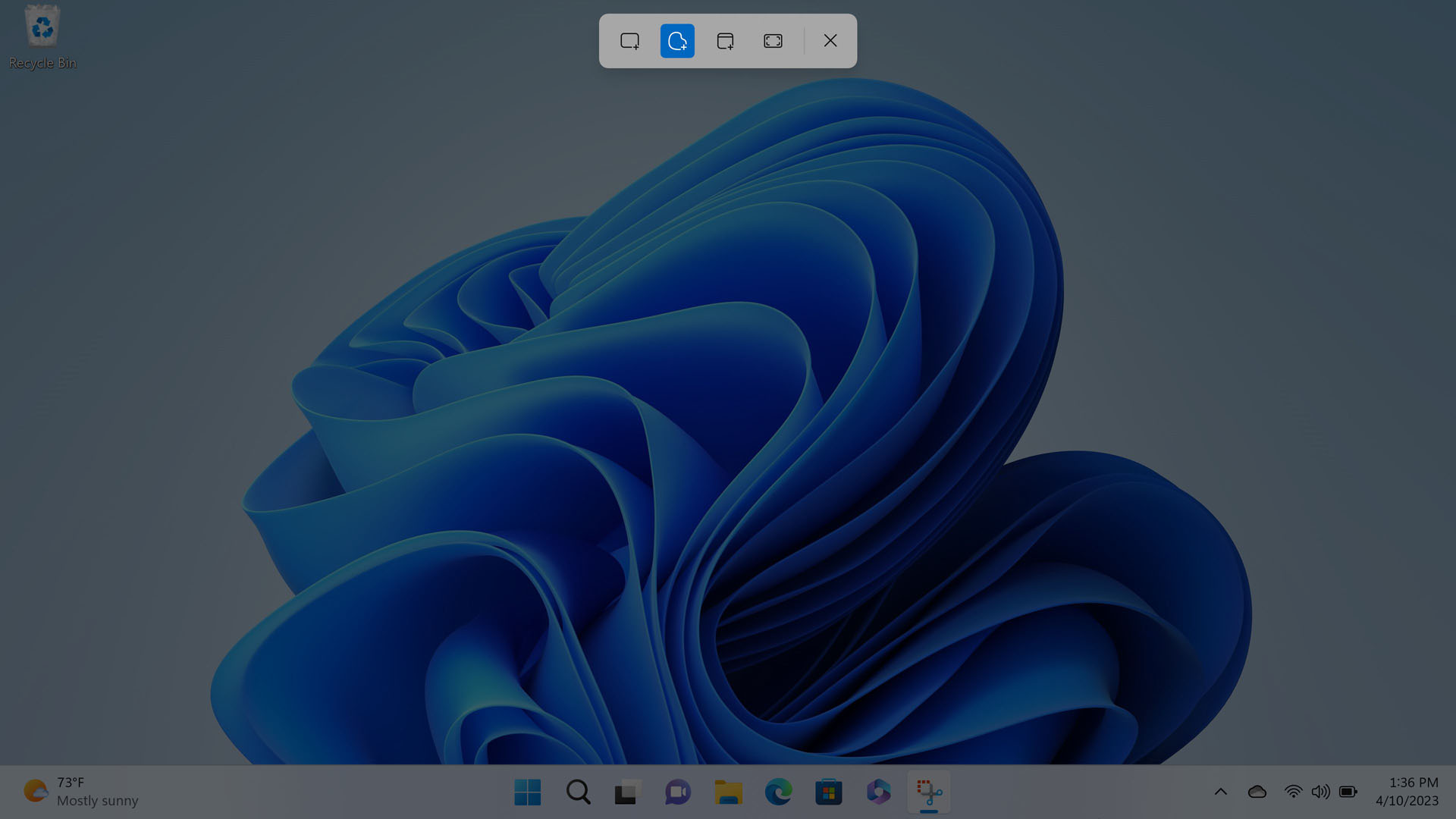
What happens next depends on which button you select:
Rectangular mode. With this mode selected, you can draw a rectangular area on-screen that lights up as you go. When you have configured the area you wish to capture, let go of the mouse button to take a screenshot.
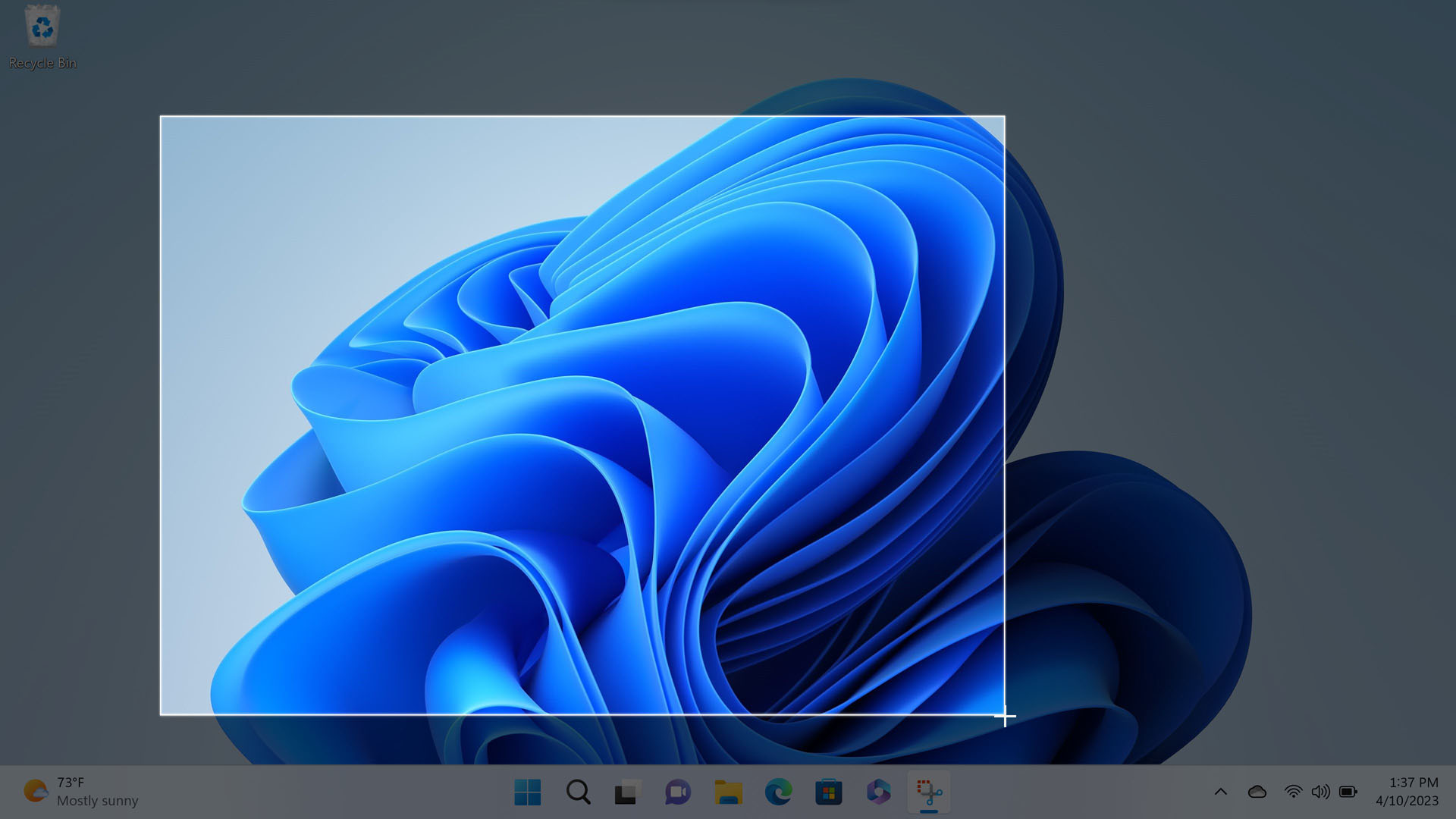
Freeform mode. With this mode selected, you can draw an arbitrary shape on-screen that lights up as you go. When you have configured the area you wish to capture, let go of the mouse button to take a screenshot.
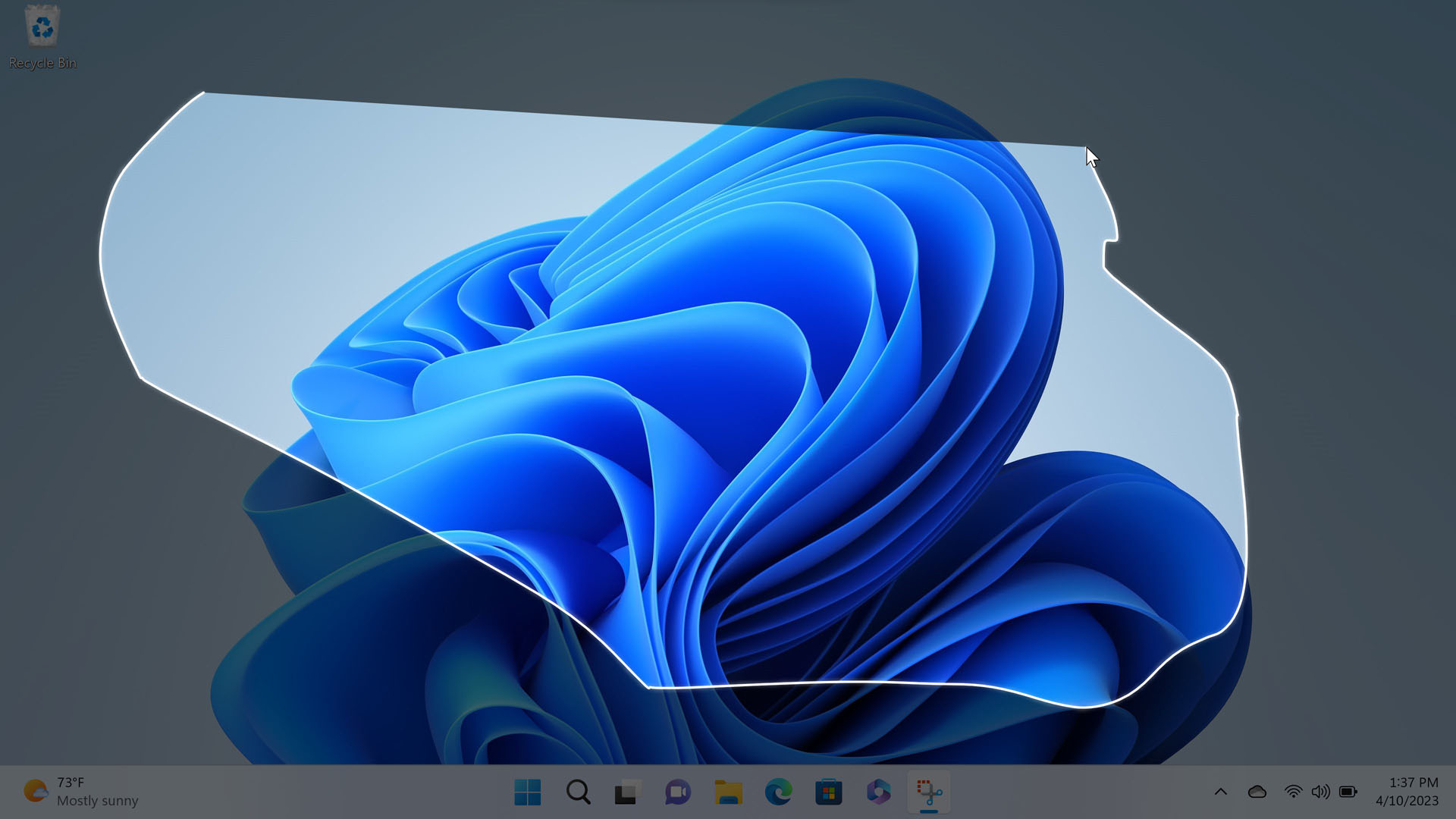
Window mode. With this mode selected, you can mouse-over available windows, noting that each will light up in turn as you do so. When you’ve found the window you wish to take a screenshot of, click the mouse button to take a screenshot.
Full-screen mode. If this mode was already selected, the Snipping Tool overlay does not appear. So just click anywhere on-screen to take a screenshot.
Screenshots taken this way are saved as PNG files in the Screenshots folder in your account’s Pictures folder. And when you return to the Snipping Tool app, it will display a thumbnail of the most recent screenshot and some basic editing tools at the bottom of the window. (You can make the window bigger for a better view.)
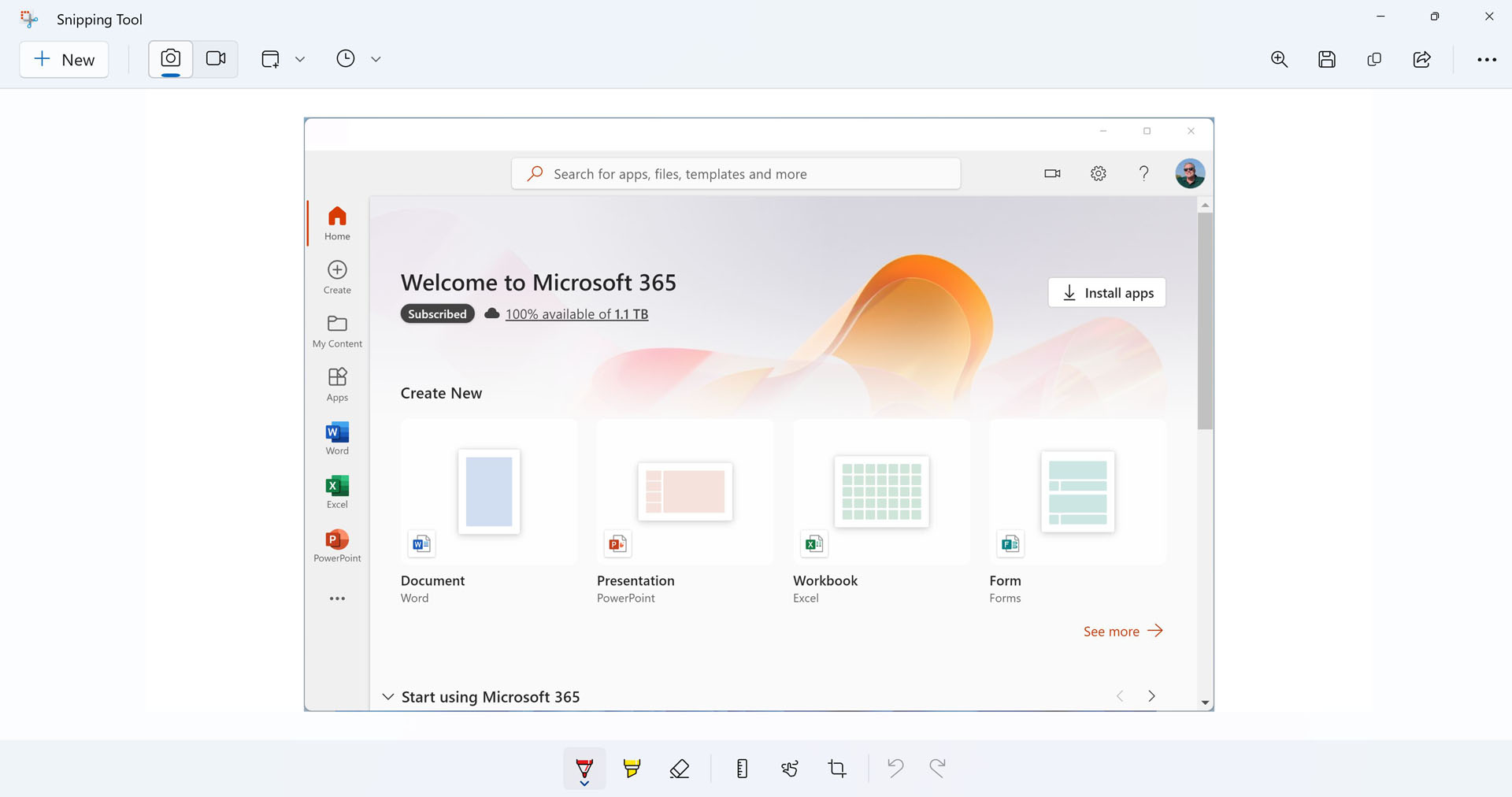
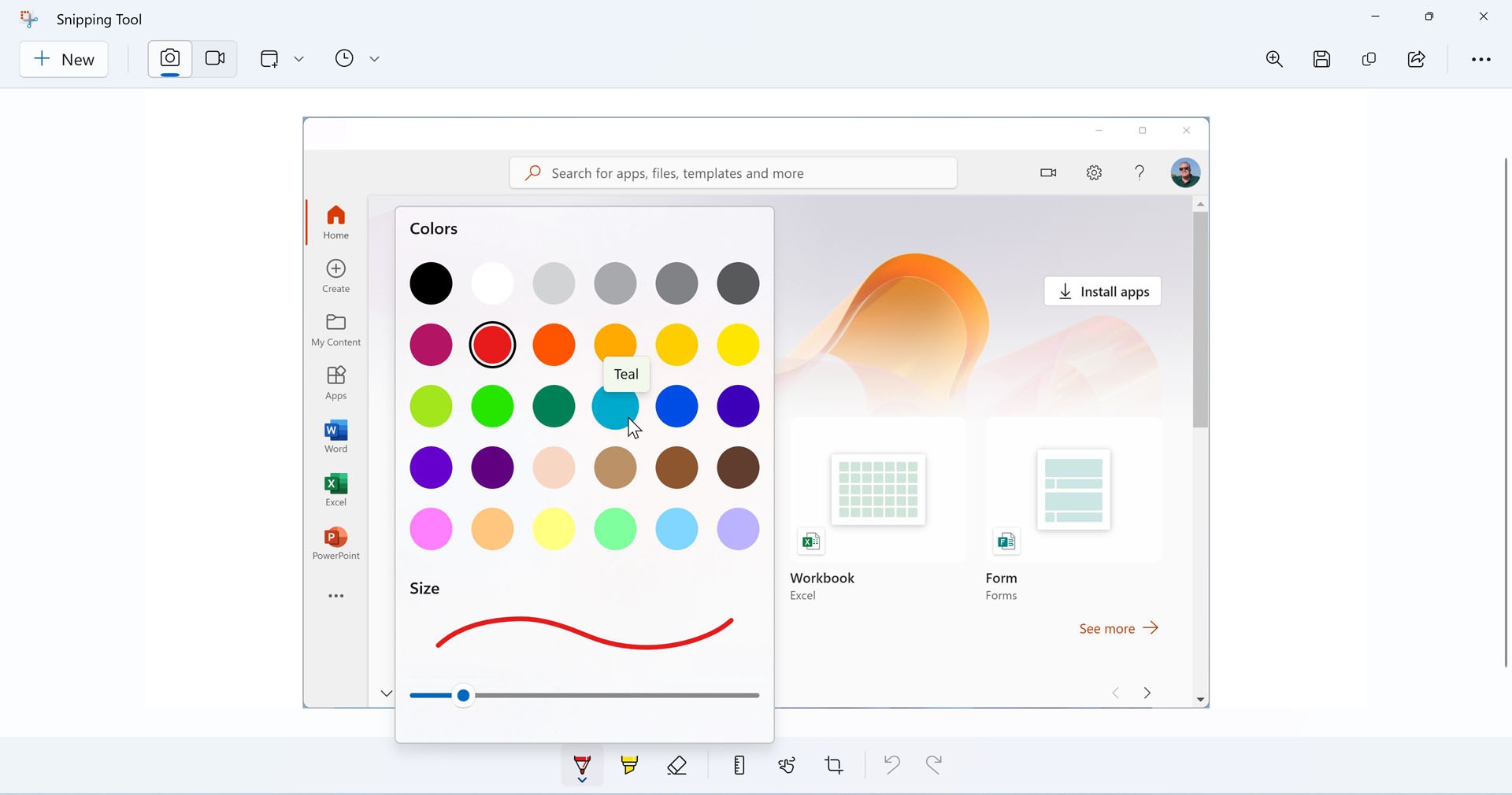
Editing tools include a ballpoint pen with various color and size options, a highlighter, an eraser, a ruler, touch writing (for those with multi-touch displays), image crop, undo, and redo. There are also options at the top right for zooming in and out of the image, saving an edited image, copying the edited image to the Clipboard, and sharing the image. And the “See more” (“…”) menu provides even more options: Open file, Open Screenshots folder, Open with, Print, Send feedback, and Settings.
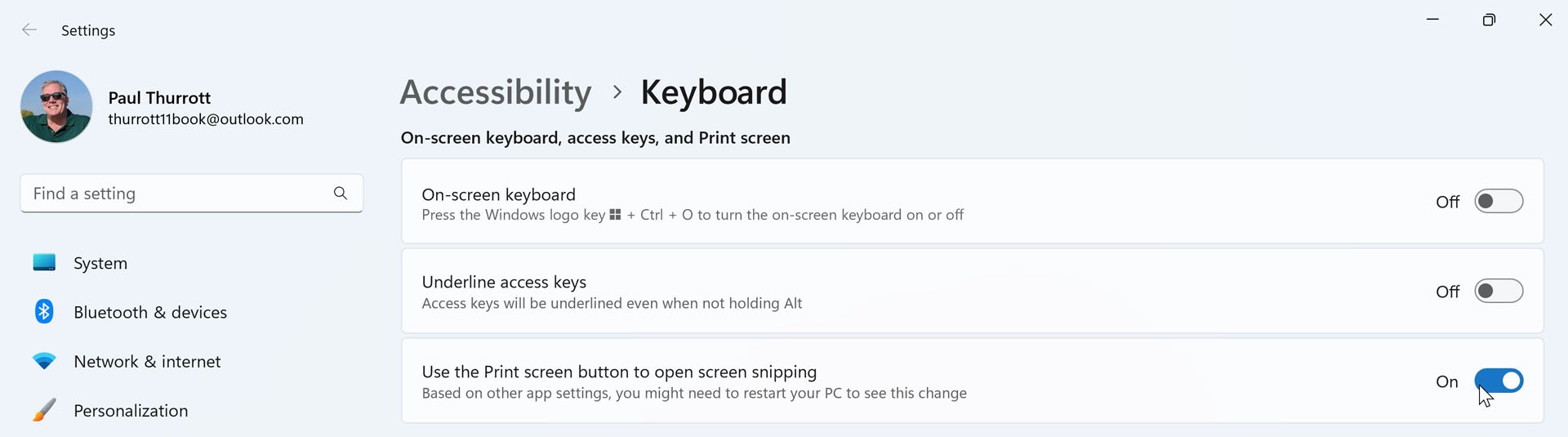
Most of the options in Snipping Tool settings are straightforward, but one, “Print Screen shortcut,” is of particular interest if you wish to reconfigure what happens when you press the Print Screen button on your keyboard. This opens the Windows 11 Settings app and navigates to the Accessibility > Keyboard page, where you will find an option called “Use the Print screen button to open screen snipping” under “On-screen keyboard, access keys, and Print screen.” If you wish to use Snipping Tool instead of the default behavior, set the option to “On.”
Capture the mouse pointer when creating a screenshot
Print Screen and the Snipping Tool are good at what they do, but they suffer from the same odd limitation: neither offers any way to capture the mouse pointer when creating a screenshot. And while there is a legacy troubleshooting tool called Steps Recorder that does offer this functionality, you can do better. You just need to use a third-party utility. Fortunately, there are some great choices out there, including some free options.
Our personal favorites are:
Greenshot. Paul used this free and open-source screenshot utility to create every screenshot in this book, so it comes highly recommended.
ShareX. This is another free and open-source screenshot utility.
Create a screenshot when using multiple displays
If you use a single display, creating a screenshot is straightforward, and that’s true whether you’re capturing the entire screen or just a single window. But when you use a multi-display setup, things get a little strange. What does it look like when you take a screenshot and there are two or more desktops?
If you’re familiar with how multiple displays look in Display settings–as discussed in the Displays chapter–then you won’t be surprised to discover that screenshots mimic the display layout you can configure in that interface. That is, these screenshots include each of the Desktops from each display, and they are laid out as they are in Display settings (and, presumably, as they are in the real world.) In the shot below, for example, you can see two displays with the second display being to the left of the first (primary) display.
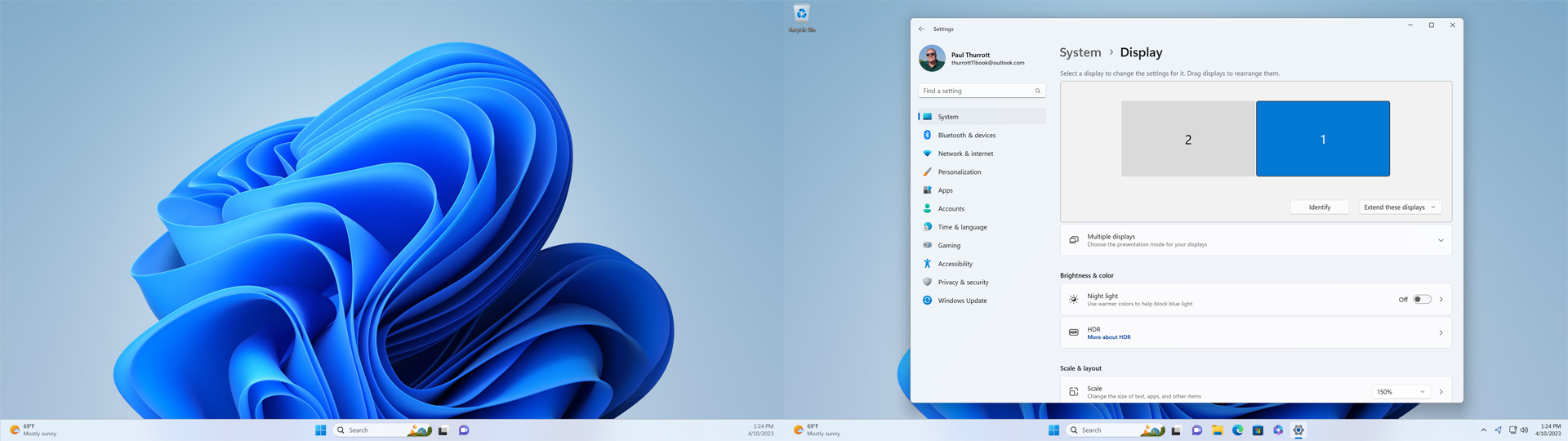
Obviously, if you use ALT + PRINT SCREEN, you will still capture only the currently focused window, no matter which display it’s on.
Use Snipping Tool to create a screen recording
In addition to taking screenshots, Windows 11’s versatile Snipping Tool app can also be used to create screen recordings. There are fewer options for this type of operation–the recording will always be some rectangular area, which you can manually set to be full-screen, for example–and there are, curiously, no settings to configure at all. Instead, what you get is a broadly-compatible 30 fps MP4 file recorded in a high bitrate and at whatever resolution you selected.
To get started, open Snipping Tool and change the Snip/Record slider to “Record.”
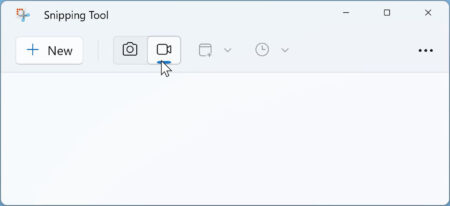
Then, click “+ New”
Or, type CTRL + N.
When you do, the recording overlay appears and the mouse pointer turns into a plus sign “+” so that you can determine which area of the screen to record. To record the entire screen, move the mouse pointer to one corner of the screen, click and hold, then drag the mouse pointer to the far corner of the screen, and then let go of the mouse button.
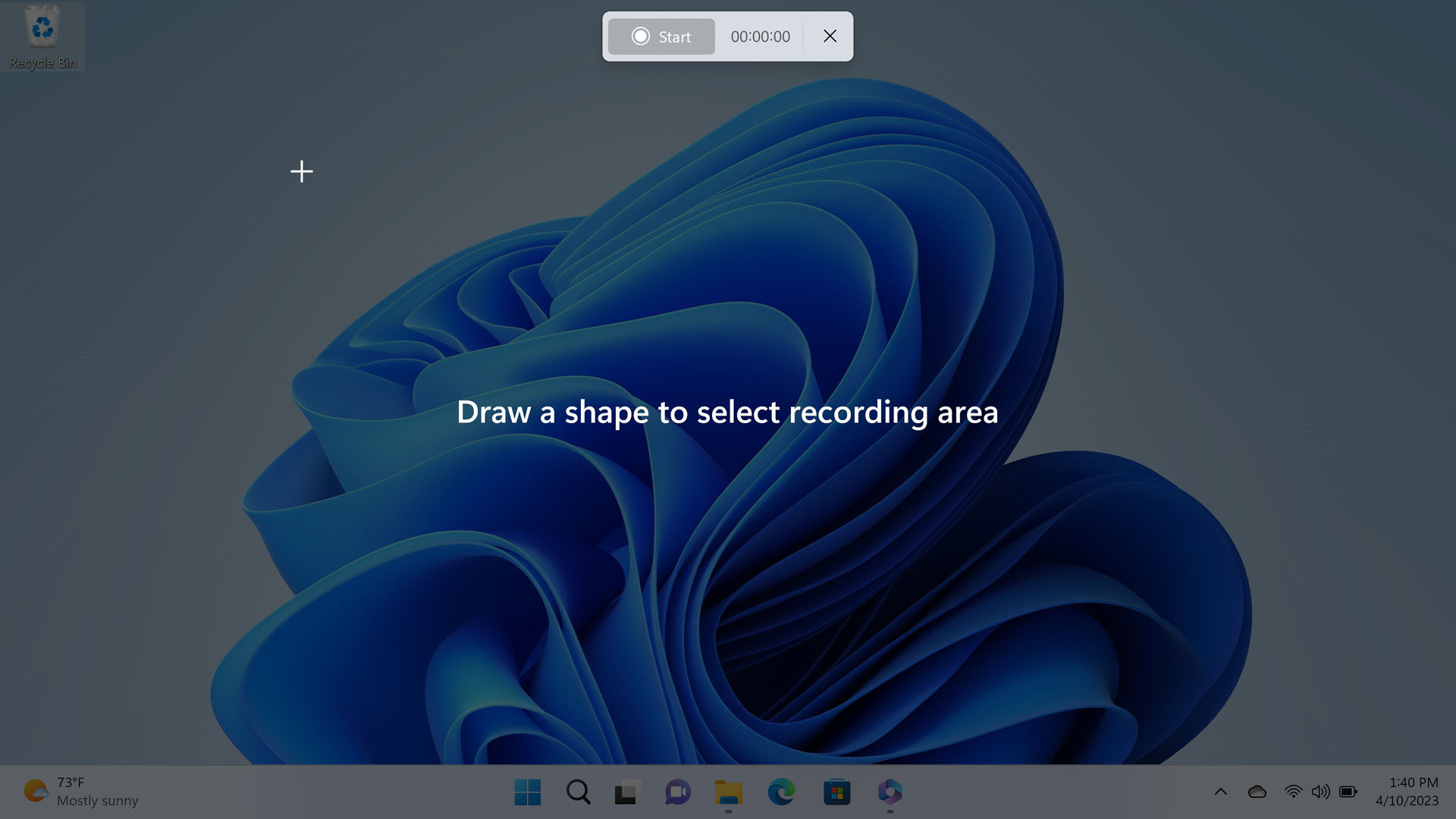
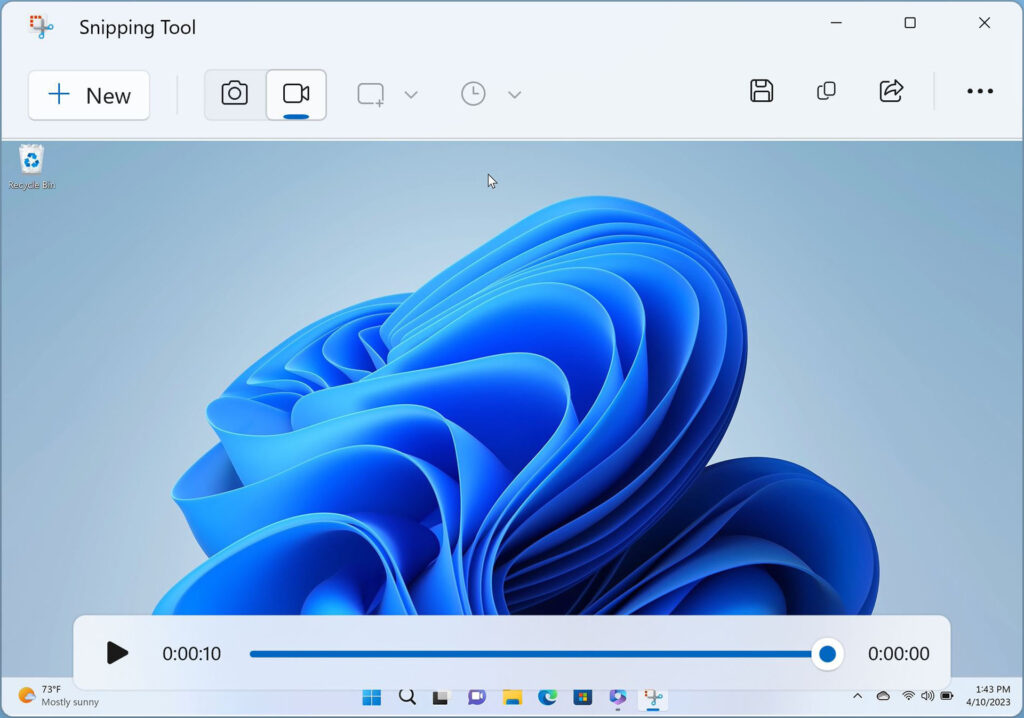
Then, click the “Start” button in the Snipping Tool overlay to begin recording. After a 3-second countdown, the screen recording will begin. Click the red “Stop” button in the Snipping Tool overlay to stop recording when you’re done. You can preview the recording in the Snipping Tool window, and it will be saved to your user account’s Videos folder.

Gain unlimited access to Premium articles.
With technology shaping our everyday lives, how could we not dig deeper?
Thurrott Premium delivers an honest and thorough perspective about the technologies we use and rely on everyday. Discover deeper content as a Premium member.